


- 慣用句
柄にもない
 Niko
柄にもない
がらにもない
out of character; unlike someone
Looking at a Japanese dictionary entry for 柄にもない, we have:
立場・地位、また能力・性格などにふさわしくない。
たちば・ちい、 また のうりょく・せいかく など に ふさわしくない。
to be unlike or unfitting for one’s standpoint, position, ability, or character
Source: goo辞書
However, you'll mostly only hear this idiomatic phrase being used to describe a person acting "out of character." In other words, it's almost exclusively used to describe「性格にふさわしくない」behavior.
The word 柄 (がら) has quite a few meanings, by the way. One of those meanings is "pattern" or "design," which is why you see this when you look up 柄 in Google Images:
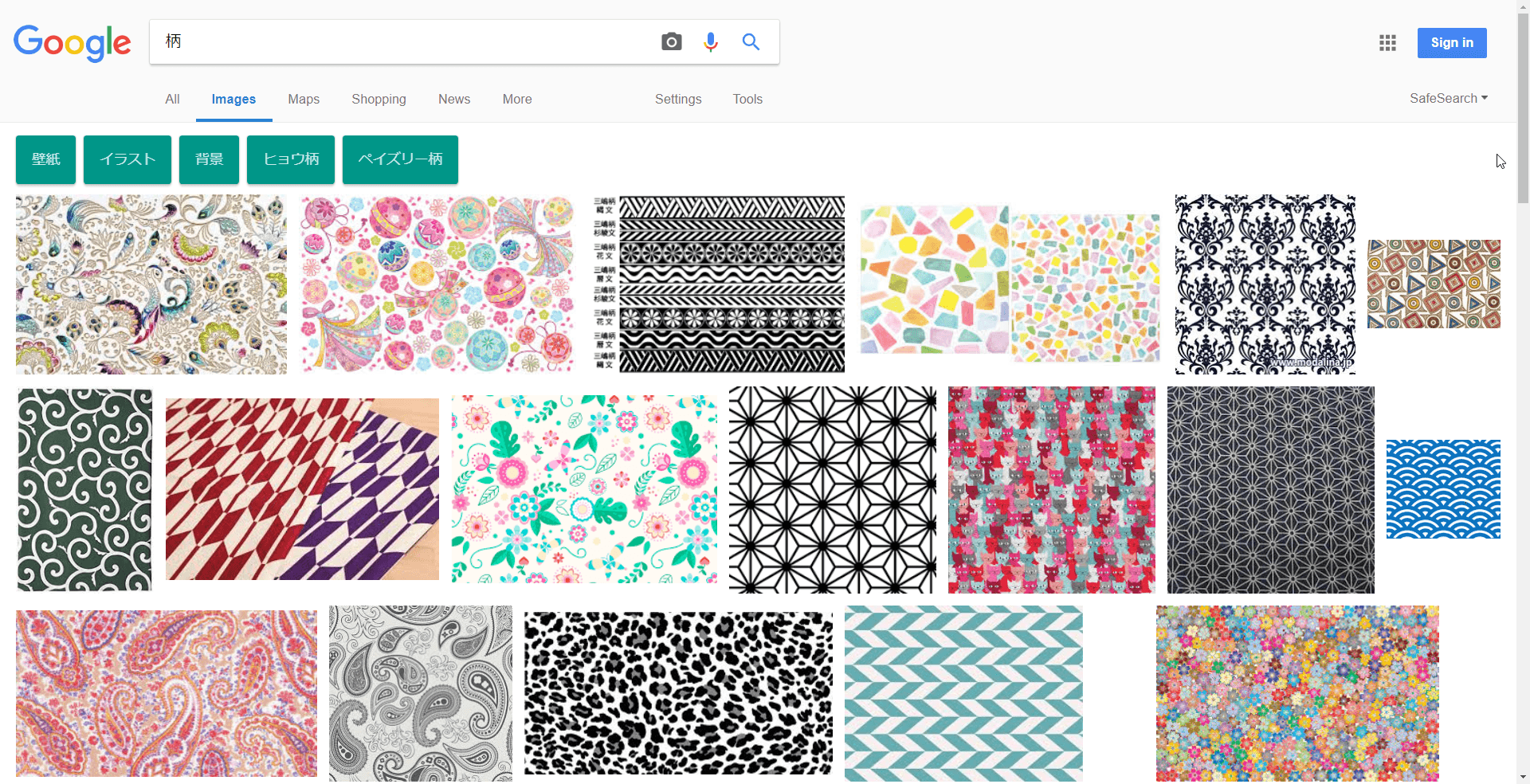
I think it's interesting that, aside from meaning "pattern" or "design," 柄 can also mean:
その人に本来そなわっている品位・性格。
その ひと に ほんらい そなわっている ひんい・せいかく。
the natural quality or character of a person
Source: goo辞書
There seems to be something right about a person's "pattern" or "design" also being their "character" or "(set of unique) qualities."
Anyway, I'm digressing...
As mentioned above, 柄にもない means "out of character" or "unlike someone."
Here are some examples...
姉は柄にもなくベビーシッターのアルバイトを始めた。
あね は がらにもなく ベビーシッター の アルバイト を はじめた。
My (older) sister started working as a babysitter, which is really out of character for her.
↑ The speaker's sister doesn't like children, or maybe she isn't good at dealing with them.
卒業式では、柄にもなく泣いてしまった。
そつぎょうしき で は、 がらにもなく ないて しまった。
I cried at the graduation, which is really unlike me.
↑ "I," the speaker, doesn't usually get emotional at these types of events.
失敗したらどうしようだなんて、柄にもないことを言うね。
しっぱい したら どう しよう だ なんて、 がらにもない こと を いう ね。
It’s unlike you to say something like, “what if it fails [what if I fail].”
↑ The listener is usually very confident, which is why the speaker thinks he/she is acting out of character.
That's all for this one.
I've never used 柄にもない in my own spoken Japanese, and I think it's time. Maybe you feel the same? ^_^
Niko
