


- Sounding Like a Native Speaker
Mistake #2 - The Gaijin R
 Niko
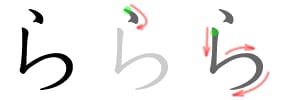
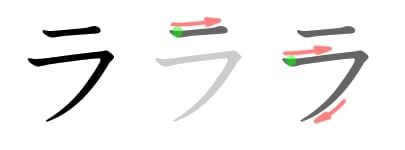
ら / ラ / ra
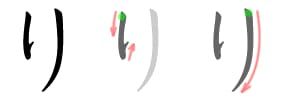
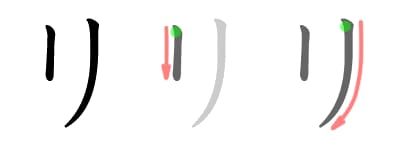
り / リ / ri
る / ル / ru
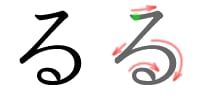

れ / レ / re


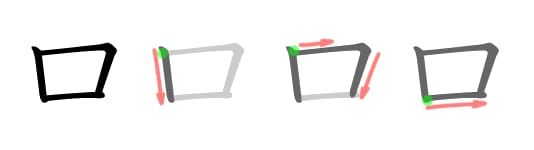
ろ / ロ / ro

I’m pretty sure that at some point in my ignorant childhood I must have made fun of an Asian person for not clearly dividing up their L’s and R’s. And, who knows, maybe you
have too.
If so, retribution is at hand.
Five years ago, when I went to a Japanese school in Tokyo, I remember that my class was practicing potential forms in Japanese, words like ⾷べられる (taberareru), “to be able to eat.”
Ta-be-ra-re-ru. Look at all those R’s! So I said something like Taberareru, and my Japanese teacher mimicked my super-gaijin R’s, and everyone in the class laughed at me.
Ouch.
I suppose justice was served that day.
The reason that they were making fun of me is that when I first started studying Japanese, they always wrote the Japanese ら り る れ ろ as ra-ri-ru-re-ro. But the Japanese “R” sound is not the English “R” sound—it’s totally different.
Contrary to popular belief, Japanese people don’t have (many) problems pronouncing “L.” They have problems pronouncing “R.” In particular, they have trouble with those words in English that connect vowels to “R,” words like “far,” “board,” “beard”, “learn,” “turn,” etc. The main issue is that they never move their tongue back as far as we do when pronouncing “R” in English. Here is a passage for an article (in Japanese) on “How to Pronounce the English “R:”
With your tongue in the same place as when saying ra-ri-ru-re-ro in Japanese, pull your tongue further back into your mouth. This is the English “R” sound… Keep your tongue at the same height that you would when saying ra~ in Japanese, then just pull your tongue further back (but not so far that it’s uncomfortable).
⽇本語のラリルレロの⾆のまま、⾆全体を奥に引き込みます。これが R の⾳になります… ⽇本語で普通に “ラーー” と発⾳したまま、⾆の⾼さをキープしながら⾆全体を奥に(苦し くない程度に)ひっこめるのです。 (Taken from this blog article.)
By taking that advice and flipping it around, we can understand a bit about the pronunciation of the Japanese “R” sound—the shape of your tongue is much like when you say “R” in English, only not so far back in your mouth (and not as far forward as when saying “L”).
So it's not ta-be-ra-re-ru, and it's not ta-be-la-le-lu. It's somewhere between the two:
⾷べられる | - taberareru - to be able to eat - A.mp3 |
⾷べられる | - taberareru - to be able to eat - B.mp3 |
⾷べられる | - taberareru - to be able to eat - C.mp3 |
When you see ら、り、る、れ、ろ, then it's not quite "ra, ri, ru, re, ro:"
ら、り、る、れ、ろ | - ra ri ru re ro - - A.mp3 |
ら、り、る、れ、ろ | - ra ri ru re ro - - B.mp3 |
ら、り、る、れ、ろ | - ra ri ru re ro - - C.mp3 |
ららら、りりり、るるる、れれれ、ろろろ ra ra ra, ri ri ri, ru ru ru, re re re, ro ro ro:
ららら、りりり、るるる、れれれ、ろろろ | - ra ra ra, ri ri ri, ru ru ru, re re re, ro ro ro - - A.mp3 |
ららら、りりり、るるる、れれれ、ろろろ | - ra ra ra, ri ri ri, ru ru ru, re re re, ro ro ro - - B.mp3 |
ららら、りりり、るるる、れれれ、ろろろ | - ra ra ra, ri ri ri, ru ru ru, re re re, ro ro ro - - C.mp3 |
Or, we can get really technical and look at Wikipedia, which tells us:
/r/ is an apical postalveolar flap undefined for laterality. That is, it is specified as neither a central nor a lateral flap, but may vary between the two. – Japanese Phonology (Wiki)
Awesome. Thanks for clearing that up, Wikipedia... said person with a PhD in Linguistics.
Or, if you’re like me, and you don’t understand a word that I’ve written so far, then you can just use my trick: Flap it.
Seriously, “flapping” is a real thing (yes, "flapping," with an 'L'). I once read an academic article about Flapping in North America. Flapping is that thing that (some) English speakers do when they come across a double “t” or “d” sound.
For example, most North Americans flap the double “t” sound in the word “butter.” So, it doesn’t sound like the “t” in “tea.”
Here’s another weird chart from Wikipedia:
Example IPA Description Language Orthography IPA Meaning
North American ɾ alveolar tap la tt er /læɾɚ/ "latter" English
alveolar lateral / ɺ Japanese ラーメン "ramen" flap ɺaːmeɴ/
ɽ retroflex flap Warlpiri d upa (?) /ɽupa/ "windbreak"

labiodental flap Karang / v̛ ara/ "animal"
Notice that the North American flap consonant is really similar to the Japanese flap consonant. So, if you’re North American, then just make that double “t” sound whenever
you need to make a Japanese “r” sound. I’ve been doing it for years now, and no one laughs at me anymore.
Also, if you think that all of this worrying about “L” and “R” is simply not worth your time and you want to be lazy, then I recommend opting for the “L” sound over the “R” sound, as you’re less likely to get criticized for it.
Niko
