


- Conjugation Drilling
Request Master, Part II (Bonus Unit H)
 Niko
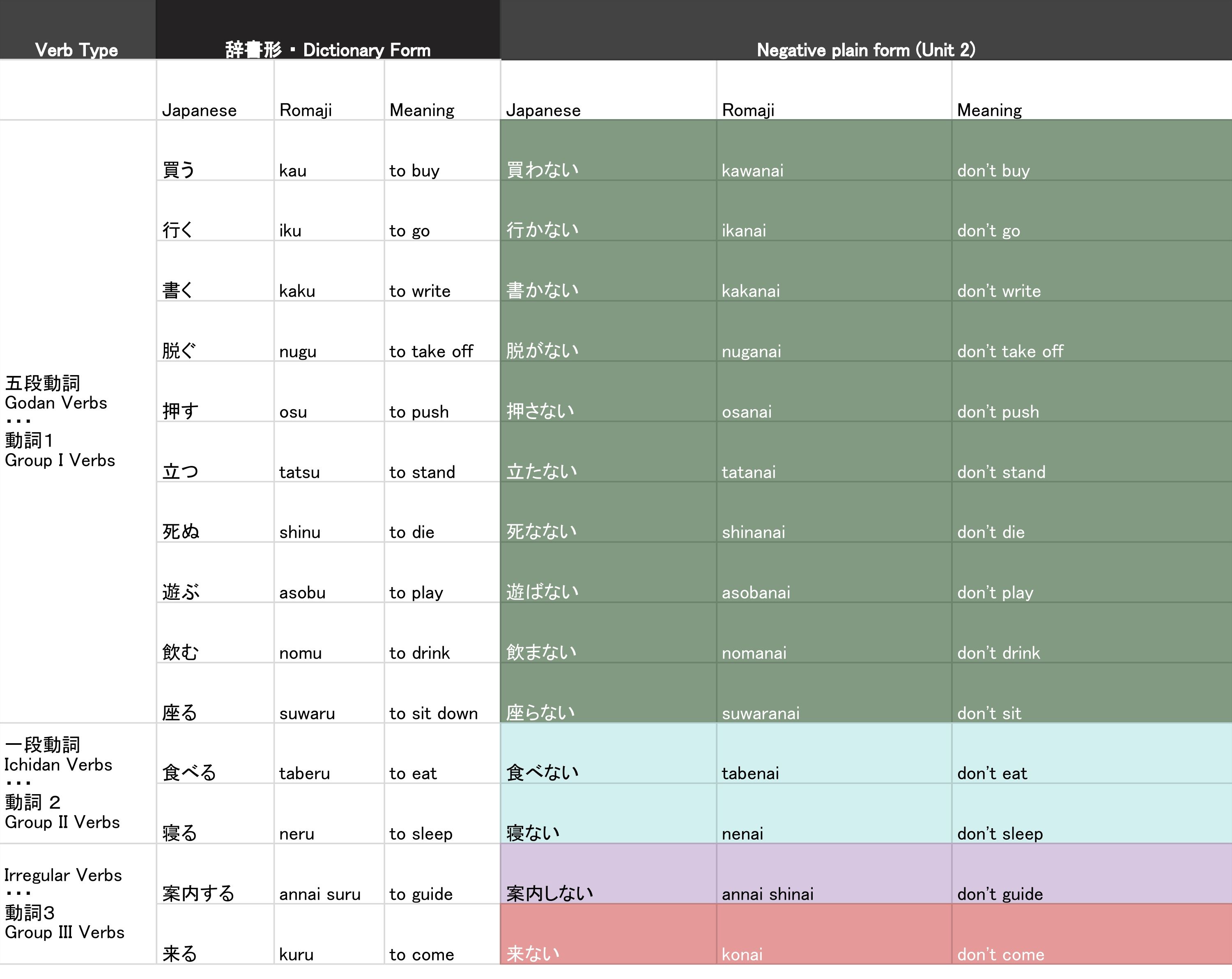
You remember how to conjugate verbs into the negative plain form?
For example, 行く (いく // to go) becomes 行かない (いかない // don't go), 買う (かう // to buy) becomes 買わない (かわない // don't buy), and so on.
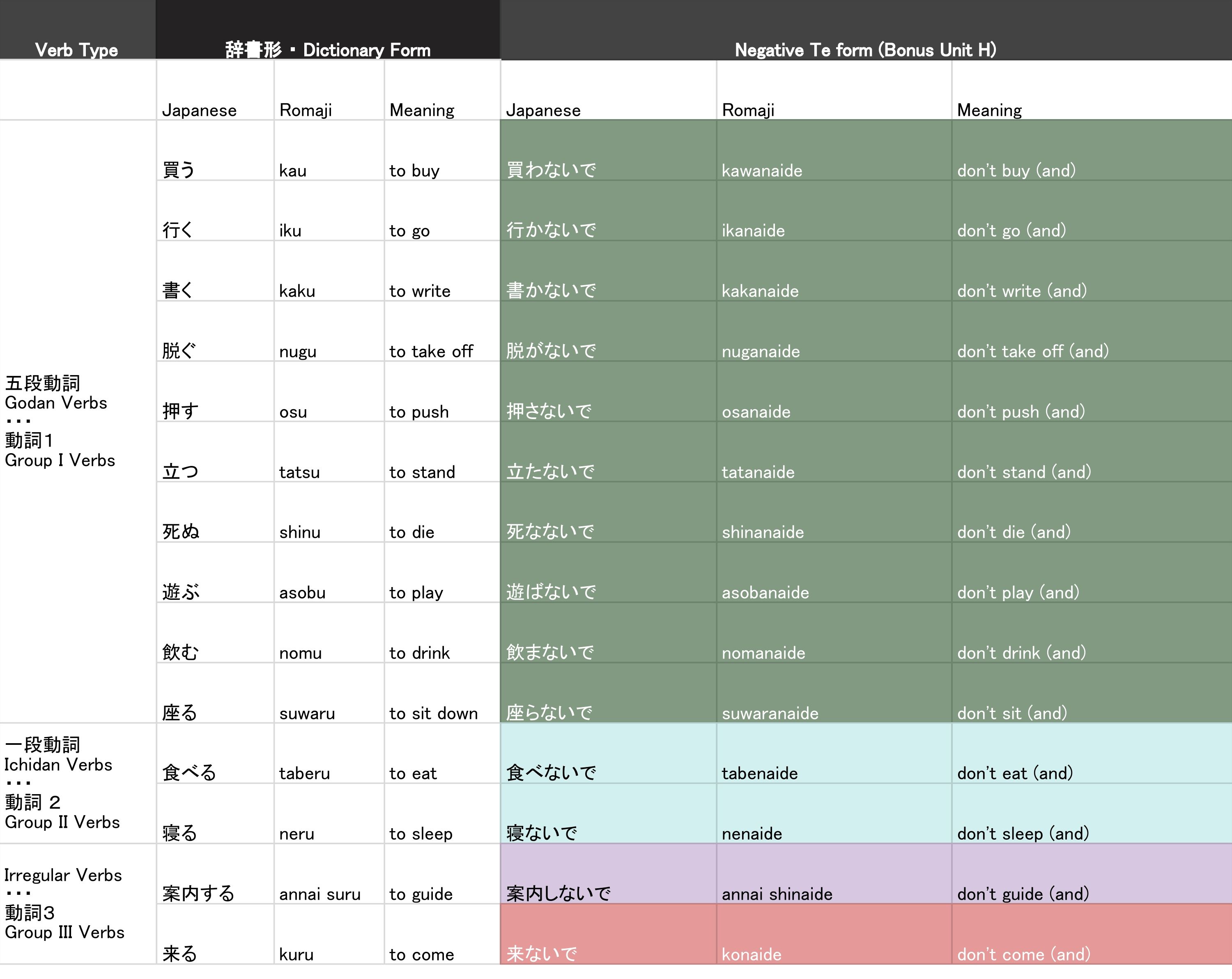
Well, we can form the negative て-form by attaching で to the end of the negative plain form.
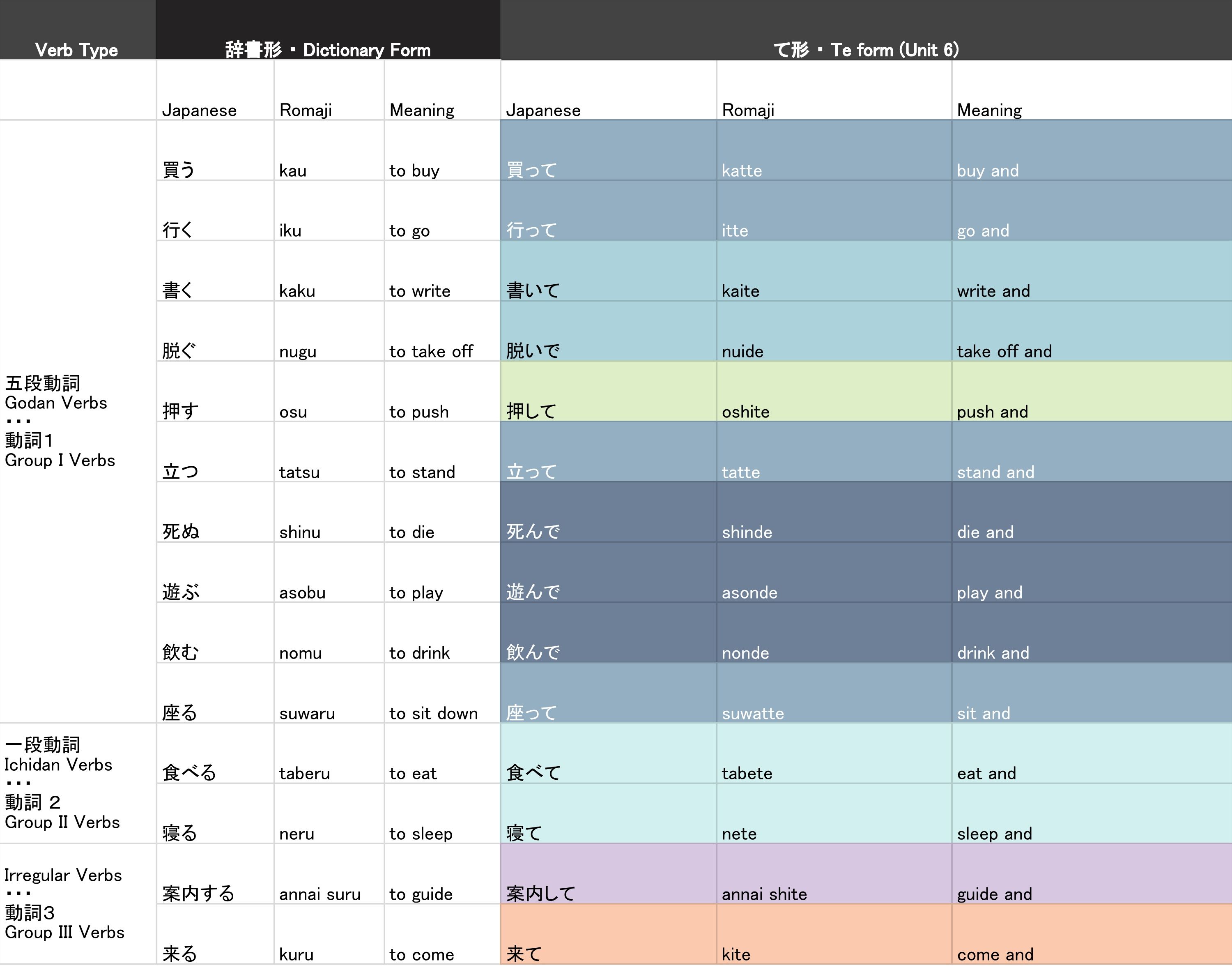
In other words, these are all て-form conjugations:
These are all negative plain form conjugations:
And these are all negative て-form conjugations:
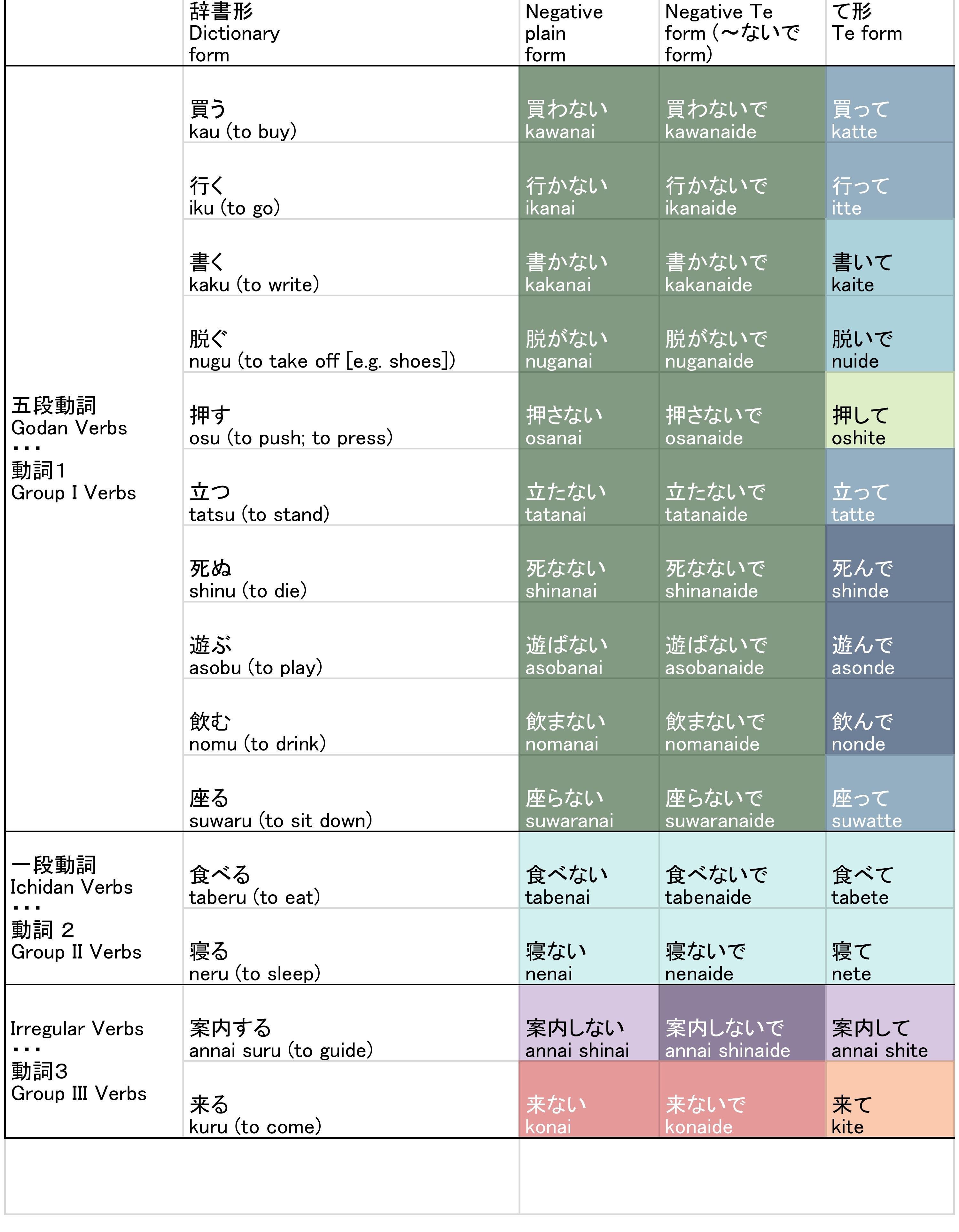
Maybe looking at it like this might help:
As you might have guessed, we can make negative requests by using the negative て-form.
Thus, instead of these:
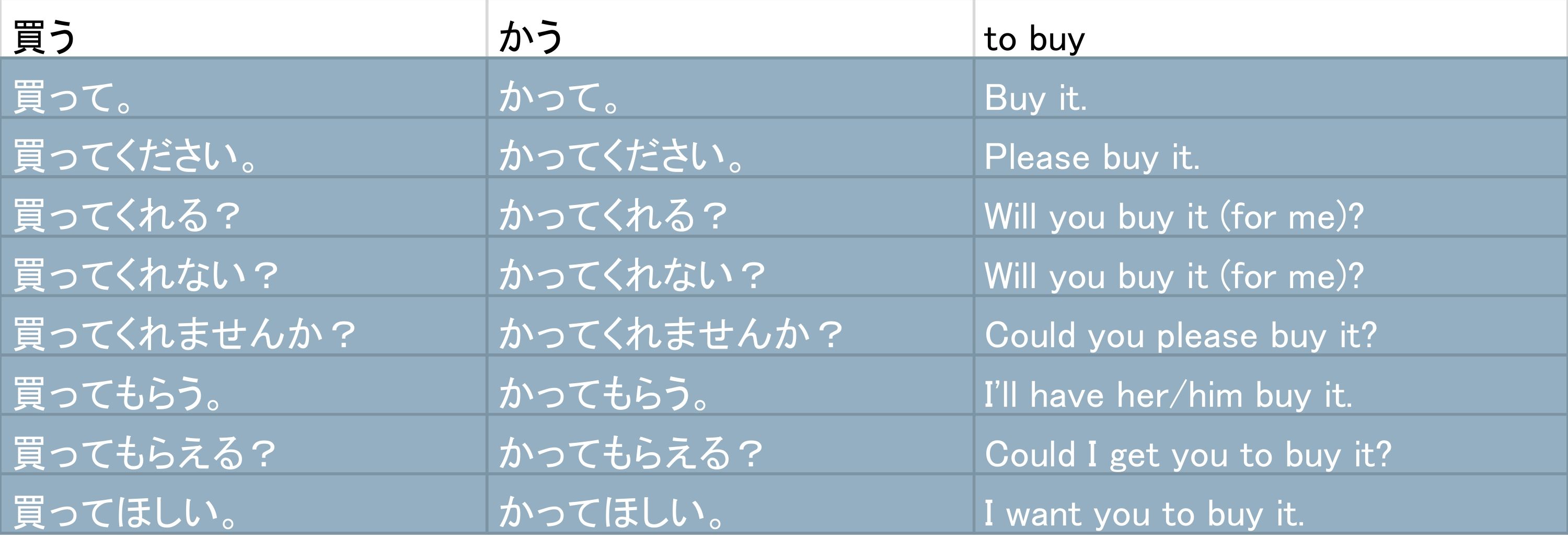
…we now have these:
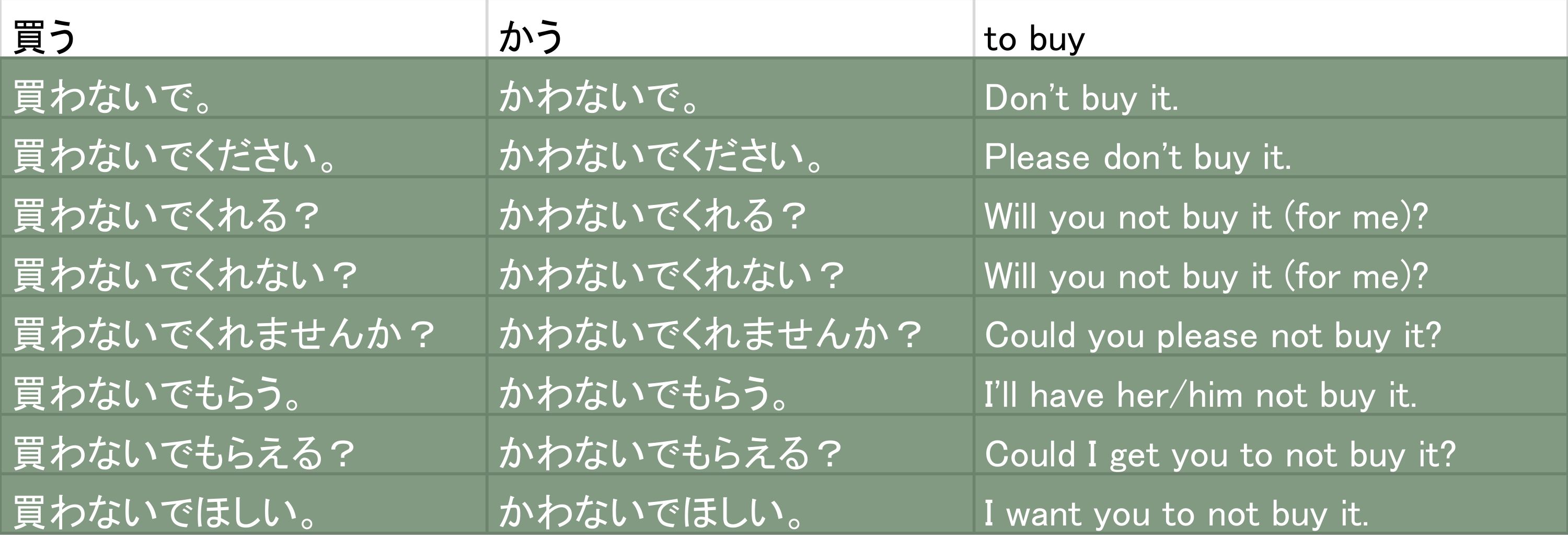
Do you have sharp eyes?
If so, you might have noticed that I left a row out of those lists of phrases. Specifically, we didn't have:

The reason for this is that the negative form of ~ていいよ is NOT ~ないでいいよ.
△ 買わないでいいよ。
△ かわないで いい よ。
Instead, we would say:
〇 買わなくていいよ。
〇 かわなくて いい よ。
〇 It's OK to not buy it.
Although I'm tempted to call this an irregular conjugation, I don't think that's accurate, really. I never know if I'm supposed to call ない a verb or an i-adjective. I think the problem lies in trying to label it in the first place, but let's not worry about that. Suffice it to say that ない sometimes conjugates like an i-adjective (e.g. when it is a standalone word and not just a verb ending).
With that in mind, can you recall what the negative て-form of i-adjectives is?
~なくて!
Why do we use this form when saying it is OK not to do something?
To be honest, I'm not entirely sure. Though I could probably find out with a whole bunch of googling in Japanese. Let's just memorize it, instead. I should mention, however, that ~なくていいよ is actually an abbreviation of ~なくてもいい, so we could also say:
買わなくてもいいよ。
かわなくても いい よ。
You don't have to buy it.
In our chart, we would have put, "It's OK to not buy it," but I thought "You don't have to buy it" would be more natural.
In more formal language, we could also stick a です in there:
買わなくてもいいですよ。
かわなくても いい です よ。
You do not have to buy it.
Disclaimer! In our ~ないで conjugation lists, we have some examples that, as mentioned in the previous section, would sound strange in certain contexts. |
In particular, it's hard to think of any situation in which this Japanese sentence will sound natural:
△ 寝なくていいよ。
△ ねなくて いい よ。
△ It's OK to not sleep.
Most importantly, almost none of the examples with 案内する (あんないする // to guide; to show [someone] around) sounded natural with the ~ないで patterns, so we're using the verb 電話する (でんわする // to call [on the phone]), instead:
X) 電話する(でんわする // to call [on the phone])
1) 電話しないで。(でんわしないで。 // Don't call [me].)
2) 電話しないでください。(でんわしないでください。 // Please don't call [me].)
3) 電話しないでくれる?(でんわしないでくれる? // Will you not call [me]?)
4) 電話しないでくれない?(でんわしないでくれない? // Will you not call [me]?)
5) 電話しないでくれませんか?(でんわしないでくれませんか? // Could you please not call [me]?)
6) 電話しないでもらう。(でんわしないでもらう。 // I'll have him/her not call [me].)
7) 電話しないでもらえる?(でんわしないでもらえる? // Could I get you to not call [me]?)
8) 電話しなくていいよ。(でんわしなくていいよ。 // It's OK to not call [me].)
9) 電話しないでほしい。(でんわしないでほしい。 // I want you to not call [me].)
Well, are you ready?
Because here is our monstrous chart in printable PDF form:
You can also download each verb pattern as a separate image. Or you can view everything as a Google Sheet.
Be strong. And if your ears start bleeding from over-audio-loopage, please take a break. ^_^
Niko
