


- Conjugation Foundation
Don't do anything! (Unit 1)
 Niko
You're going to love ichidan verbs because the stem never changes.
For every type of conjugation, all you have to do is stick a verb ending on to it, and you're done.
That's why the verb stems of 食べる (たべる // to eat) and 寝る (ねる // to sleep) — which are 食べ- (たべ-) and 寝- (ね-), respectively — are the same in every form listed on our cheat sheet:
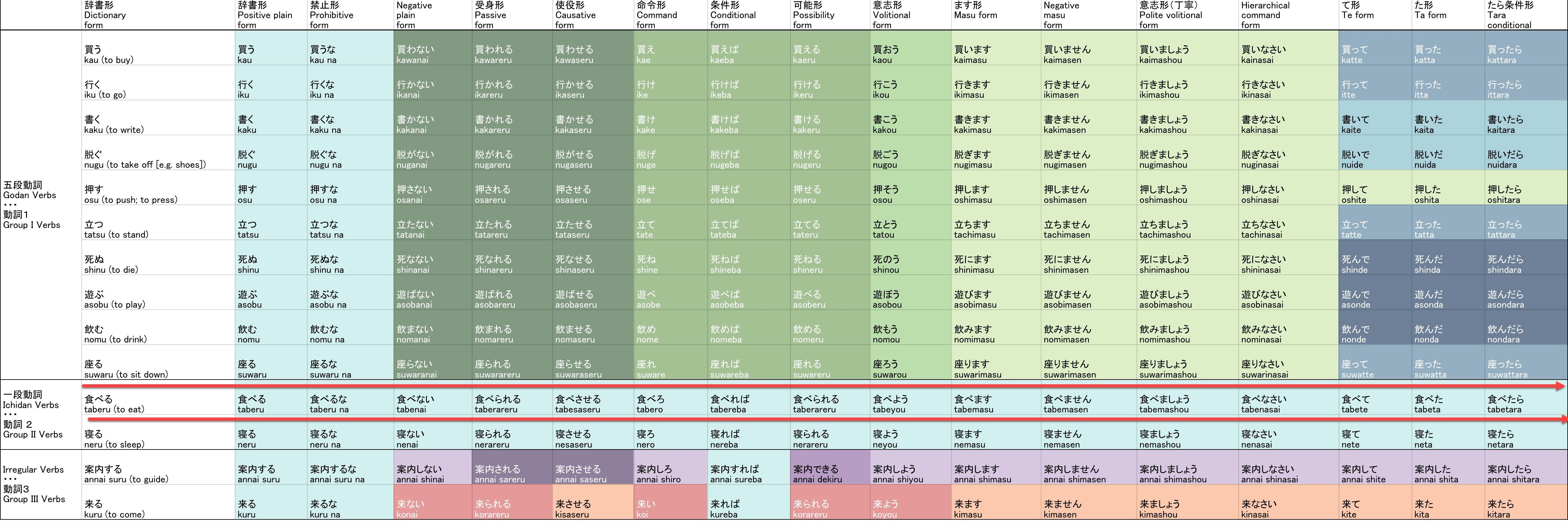
食べる | taberu | to eat |
食べるな | taberu na | don't eat! |
食べない | tabenai | don't eat |
食べられる | taberareru | be eaten |
食べさせる | tabesaseru | make/let (someone) eat |
食べろ | tabero | eat! |
食べれば | tabereba | if one eats |
食べられる | taberareru | can eat |
食べよう | tabeyou | let's eat |
食べます | tabemasu | eat |
食べません | tabemasen | do not eat |
食べましょう | tabemashou | let's eat |
食べなさい | tabenasai | eat! |
食べて | tabete | eat and |
食べた | tabeta | ate |
食べたら | tabetara | if/when one ate |
寝る | neru | to sleep |
寝るな | neru na | don't sleep! |
寝ない | nenai | don't sleep |
寝られる | nerareru | have (someone) sleep |
寝させる | nesaseru | make/let (someone) sleep |
寝ろ | nero | sleep! |
寝れば | nereba | if one sleeps |
寝られる | nerareru | can sleep |
寝よう | neyou | let's sleep |
寝ます | nemasu | sleep |
寝ません | nemasen | do not sleep |
寝ましょう | nemashou | let's sleep |
寝なさい | nenasai | sleep! |
寝て | nete | sleep and |
寝た | neta | slept |
寝たら | netara | if/when one slept |
There are a couple of other conjugation forms in which the stems of other verbs don't change, as well.
We've already seen the present tense of the positive plain form, which is the same as the dictionary form. That's when the verb doesn't change at all:
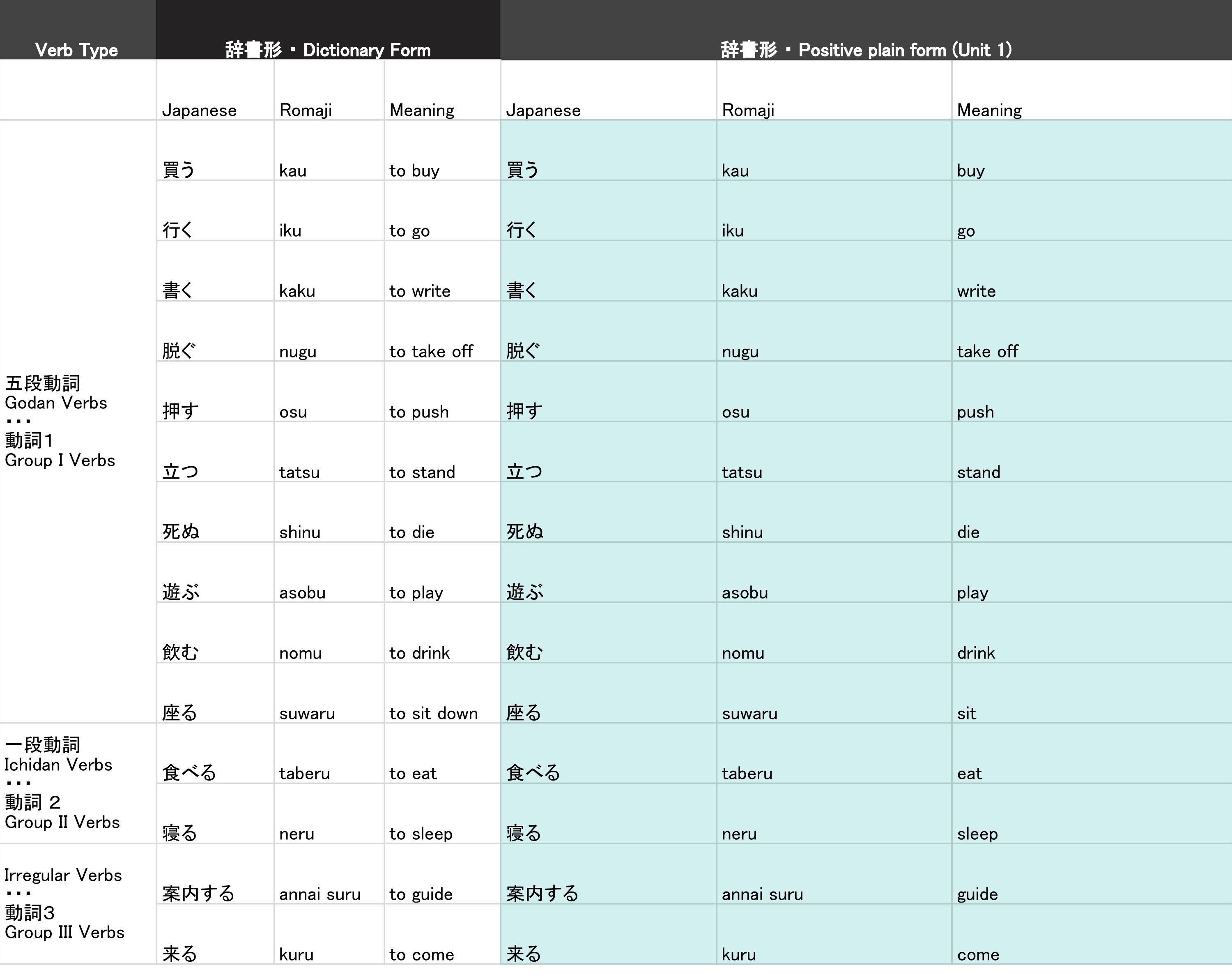
Perhaps you remember that we talked about such verbs in an earlier lecture, in which we saw this dialogue:
A:
明日予定ある?
あした よてい ある?
Do you have any plans tomorrow?
B:
別に。ナミは?
べつに。 ナミ は?
Not really. How about you?
A:
勉強する。
べんきょう する。
I’m gonna study.
B:
偉いね。
えらい ね。
Impressive.
Let's talk about something new, though.
There is another conjugation form in which no verb stems change: 禁止形 (きんしけい // prohibitive form)!
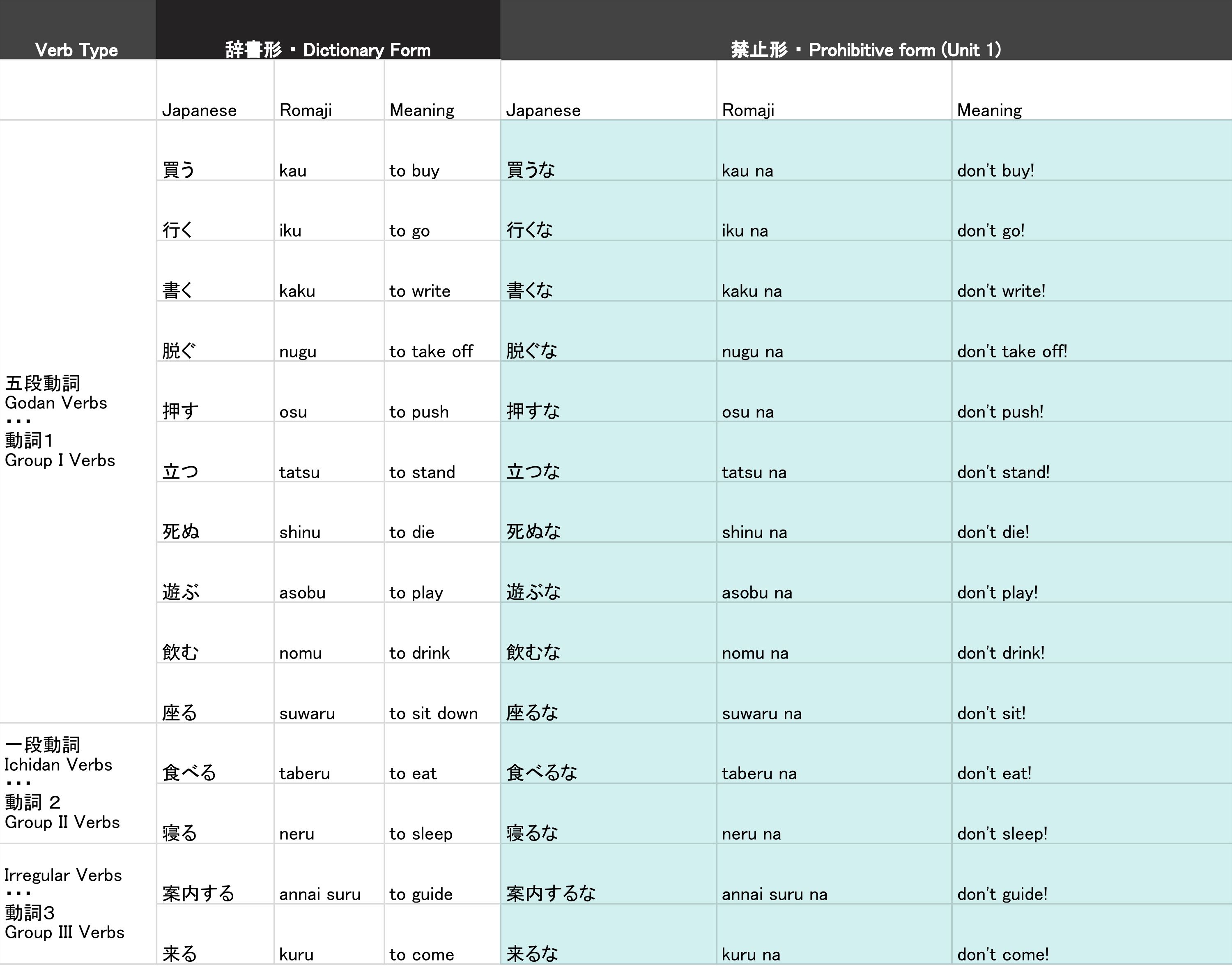
When we are commanding someone not to do something, we can just snap a な onto the end of a dictionary-form verb. So, take a verb like 座る (すわる // to sit), snap な onto the end, and you get:
座るな!
すわる な!
Don't sit down!
These negative commands are typically used in informal speech. They have the potential to sound quite rude, so please be careful using them. 禁止形 will be covered more in depth in a future JLPT N4 lesson.
Niko
