


- JLPT N3
おかげで
 Niko
The fact that おかげで is N3 grammar is a travesty.
Because it's a really awesome way to thank someone for their help. And saying thank you eloquently makes you look cool in any language.
Dictionary entry:
おかげで
thanks to; owing to; because of
Let's start with a slight variation of this grammar point---a common, polite way to tell your teacher that they are to thank for all kinds of great stuff:
おかげさまで
thanks to you
Example, pls:
A:
東京大学に合格したそうですね。おめでとう。
とうきょう だいがく に ごうかく した そうですね。 おめでとう。
I heard that you got accepted to Tokyo University. Congratulations.
A more literal translation would be, "I heard that you passed the entrance exam for Tokyo University"... since that is how university admissions are handled in Japan--with entrance examinations.
B:
おかげさまで。ありがとうございます。
おかげさまで。 ありがとう ございます。
I couldn't have done it without you. Thank you.
Now, I know you must be getting really excited, because Person B just dropped a sentence that is extremely easy to duplicate and is highly useful.
Teacher:
Bro, you're, like, really good at Japanese.
You:
おかげさまで。
But what if we want to "thank" someone or something other than "you?"
Well, then we would need to do this thing I read about in a book: Grammars.
Sentence:
皮膚科でもらった塗り薬のおかげで、にきびがなくなりました。
ひふか で もらった ぬりぐすり の おかげで、 にきび が なくなりました。
My acne went away thanks to the ointment I got at the dermatologist.
Thanks to A, B.
= A おかげで, B.
Since the word directly before おかげで was a noun, we put a の between them:
塗り薬のおかげで
thanks to ointment
Let's all take a moment to appreciate that the word for "ointment" is:
塗り薬
ぬりぐすり
ointment
Well, another literal translation might be something like "plaster-medicine" or "smear-medicine." Personally, though, I'm on team "paint-medicine."
Speaking of which, when I googled "paint medicine" (for, you know, research purposes), this majestic beast popped up on my laptop screen:

And I learned a new term: "medicine hat horse."
Could today get any better?
\(*o*)/
Sorry, what was I talking about?
Oh yeah, ointment!
Err, I mean, grammar...
母が背中を押してくれたおかげで、起業する決心がつきました。
はは が せなか を おして くれた おかげ で、 きぎょう する けっしん が つきました。
It was thanks to a supportive push from my mom that I got the resolve to start my own business.
This time we had a past tense plain form verb right before おかげで.
Since おかげで gets real personal with plain-form verbs, we can put them right next to each other:
押してくれたおかげで
thanks to being pushed
What if you're not 100% sure that A is to thank for B?
Well...
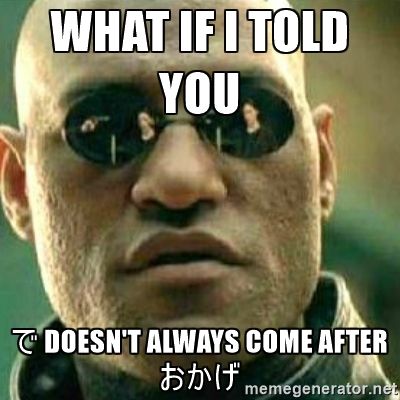
To express our doubt, we can swap out で with か:
タバコをやめたおかげか、最近ご飯がおいしく感じるようになった。
タバコ を やめた おかげか、 さいきん ごはん が おいしく かんじる ように なった。
Lately food has been tasting better, maybe thanks to the fact that I quit smoking.
We also don't use で when おかげ is at the very end of our sentence.
In that case, で (which tends to only come at the end of sentences that are requests/commands) becomes です:
わたしが無事に卒業できたのは、熱心に勉強を手伝ってくれた友人たちのおかげです。
わたし が ぶじ に そつぎょう できた の は、 ねっしん に べんきょう を てつだって くれた ゆうじん たち の おかげ です。
I was able to graduate without problems thanks to my friends, who enthusiastically helped me with my studies.
That's all for this one.
I would tell you to go study, but I have a feeling you're faced with more pressing matters at the moment--like googling different breeds of horses.
Niko
