


- NDL
Another Kanji Closeup 得 → 損
 Niko
In the last lesson, we looked at 得 and its array of awesome uses.

Writing that lesson, I was reminded of another word/kanji that has pretty much the opposite meaning:
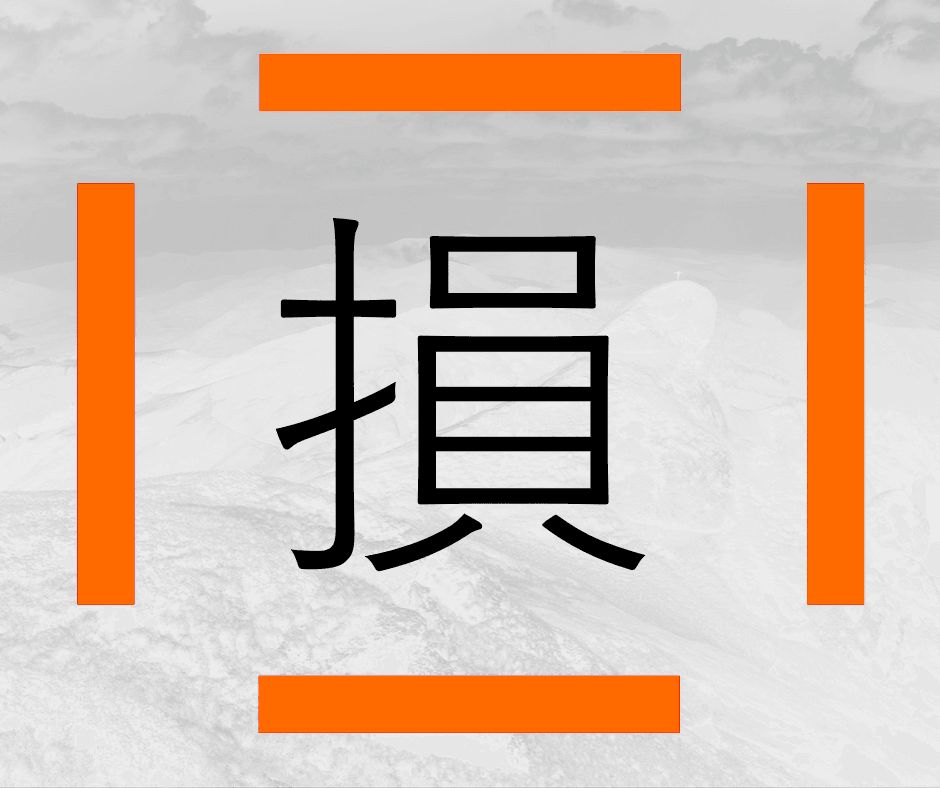
In particular, I was reminded of the contrast between these two phrases:
得する
とくする
to make a profit; to get a good deal
損する
そんする
to lose; to suffer harm
I'm not going to say that they are exact opposites, but they are fun to learn together as a set.
Check out these rad sentences with 損 (そん), which all by itself means something like "loss; disadvantage:"
投資で100万円損した。
とうし で ひゃくまん えん そん した。
I lost 1 million yen investing. // I lost 1 million yen on a (bad) investment.
みなきゃ損だよ!
みなきゃ そん だよ!
You're missing out if you don't watch it. // You have to watch it!
For example, you could say this if you're trying to convince someone why they MUST watch your favorite movie.
A:
合コンどうだった?
ごうこん どう だった?
How was the gou-kon?
A 合コン is kind of like a group blind date, often with 3-4 guys and 3-4 girls, with one guy and girl knowing each other. Actually, the Toby in Tokyo story is a 合コン.
B:
つまんなかった。行って損した。
つまんなかった。 いって そん した。
It was boring. I shouldn't have gone. [It wasn't worth my time.]
A:
1000円あげるからiPad買って。
せん えん あげる から アイパッド かって。
I'll give you 1,000 yen, so buy me an iPad.
1,000 yen is around $10. The nuance is that A is joking.
B:
それじゃあ俺が損だろ!
それじゃあ おれ が そん だろ!
That'd cost me money!
いつもあたしばっかり損してる!
いつも あたし ばっかり そん してる!
I'm always the one losing out!
Sounds like something a negative person rather unhappy with life might say. *_*
Finally, just like last time, let's look at a proverb.
Well, not quite a proverb, I guess. Just a common phrase:
正直者が損をする。
しょうじきもの が そん を する。
Honesty doesn't pay.
If anything's a (Japanese) proverb, it's the following sentence, which is also quite common:
正直者がバカを見る。
しょうじきもの が ばか を みる。
The honest man is made a fool.
The phrase 馬鹿を見る(ばかをみる)means to experience some unpleasant thing as a result of being an honest person.
Niko
