
- NDL
Reading a Scary Story

I have found while learning a new language, sometimes it is hard to really get interested in media in that language.
I have watched thousands of hours of Japanese TV, tried a hundred of different Japanese bands to listen to, and read dozens of books. However, I just don't find them as deep or interesting as media in English.
I have thought long and hard about this and I have hit upon a simple conclusion: Japanese words have yet to have a real impact on me; therefore, the feeling I get isn't as strong in Japanese when compared to the same words in English.
For example, I have heard and said the words “I love you” from a very young age, and when I hear these words, I can feel love, so to speak. So when I watch a movie and one character says “I love you” to another, I understand that feeling; the words evoke the same feeling in me, and I can connect with the characters. Not so much in Japanese. If I am watching a Japanese drama and a character says 愛してる(あいしてる) or 大好き(だいすき), I don’t feel the same connection.
However, there is hope! The one feeling that has broken through this lack of connection is FEAR. From very early on in my Japanese studies, I have been drawn to horror. In fact, some of the first short stories I ever read in Japanese were scary stories for children. As my studies progressed, I really enjoyed mystery novels and movies that are gory or scary.
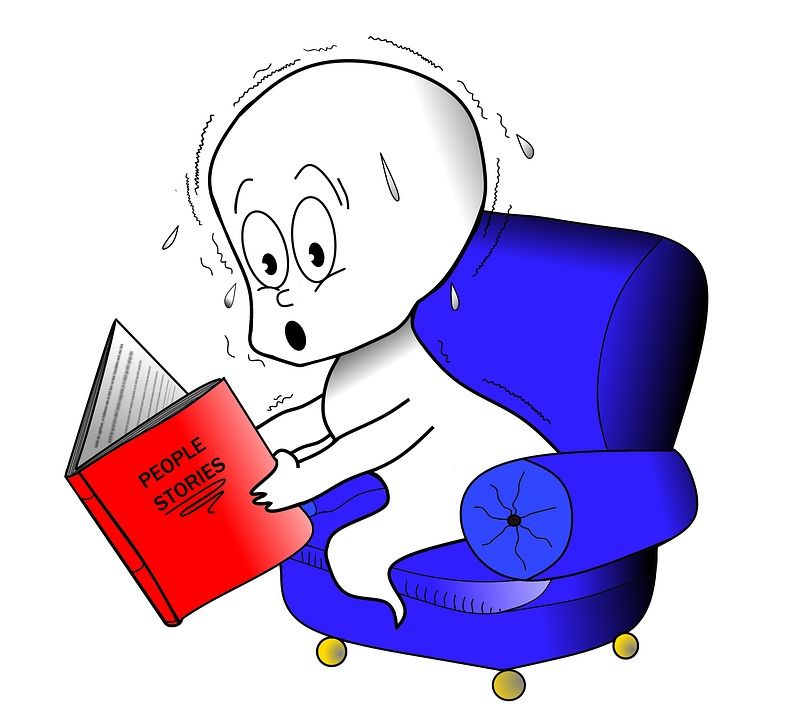
I figure some of you are running into the same problem, so I have a simple solution: Let’s scare the crap out of each other!
I found a collection of short scary stories online and decided to go over one of them for this lesson. Since they were written for children, they aren’t too scary, but I hope you get the same shiver I did, and I hope that it will solidify some of these words and phrases in your head.
子どもの頃の話。
こども の ころ の はなし。
A story from my childhood.
頃 means “at that approximate time,” and it usually used in a set phrase as 子どもの頃 like above to mean “when I was a child.”
子どもの頃、僕は2階建ての借家にすんでいた。
こども の ころ、 ぼく は にかいだて の しゃくや に すんでいた。
When I was a child I lived in a rented 2 story house.
~階建て is a counter for “n-story house.”
母親も仕事をしていたので、学校から帰っても自分一人のことが多かった。
ははおや も しごと を していた ので、 がっこう から かえって も じぶん ひとり の こと が おおかった。
Since my mother also worked, I was often home by myself after school.
ある日、夕方遅く学校から帰ってくると、家の中が暗い。
あるひ、 ゆうがた おそく がっこう から かえって くる と、 いえ の なか が くらい。
One day, when I came home from school late in the evening, the house was dark.
「おかあさ~ん」と呼ぶと、2階から小さな声で「はあ~い」と 応える声がする。
「おかあさ~ん」と よぶ と、 にかい から ちいさな こえ で 「はあ~い」 と こたえる こえ が する。
When I yelled “Mom,” I heard a small voice answer “yes,” from the second floor.
The ~ symbol in this case means an elongation of the word when you are speaking. So はあ~い, is much like the English “yeeeees.”
もういっかい呼ぶとまた「はあ~い」。
もういっかい よぶ と また 「はあ~い」。
When I called again, again I heard “yes.”
自分を呼んでいるような気がして、2階へあがる。
じぶん を よんでいる ような きがして、にかい へ あがる。
It felt like it was calling out to me, so I climb to the 2nd floor.
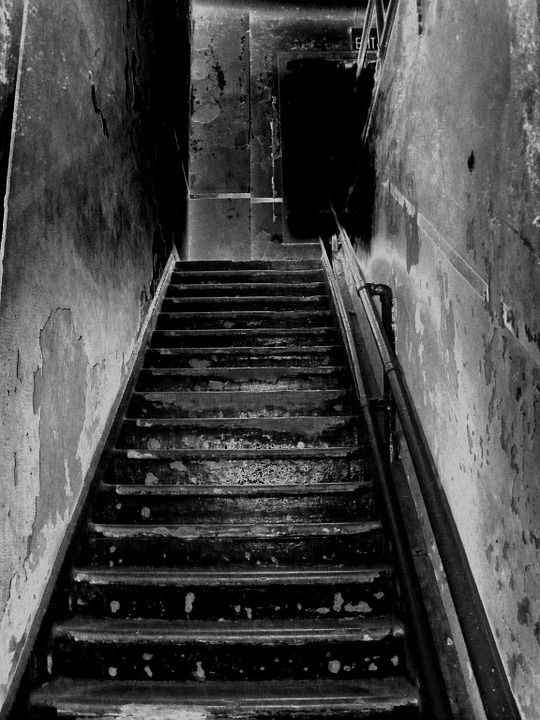
階段をあがったところでまた母親を呼ぶと、奥の部屋から「はあ~い」と声がする。
かいだん を あがった ところで また ははおや を よぶ と、 おく の へや から 「はあ~い」 と こえ が する。
As I was climbing the stairs, when I called my mother again, from the inside room, the voice said “yes.”
奇妙な胸騒ぎを感じるのと、いっこくも早く母に会いたいのとで、奥の部屋へゆっくりと 近づいていく。
きみょうな むなさわぎ を かんじる のと、いっこくもはやく はは に あいたい のと で、おく の へや へ ゆっくり と ちかづいていく。
I slowly moved closer to the inside room because I had a strange premonition and I wanted to see my mother.
~のと~のとin this sentence is showing the reason for doing something. The narrator climbs up the stairs because he has a strange premonition and he wants to see his mother, のと is just labeling those reasons.
そのとき、下で玄関を開ける音がする。
そのとき、 した で げんかん を あける おと が する。
In that moment, there was the noise of the front door opening below me.
玄関 is the small entrance space in which you remove your shoes in a Japanese house, after entering the front door. Even the smallest apartments have one.
母親があわただしく買い物袋をさげて帰ってきた。
ははおや が あわただしく かいものぶくろ を さげて かえってきた。
My mother hurriedly came in, the shopping bags hanging from her.
「しゅんすけ、帰ってる~?」明るい声で僕を呼んでいる。
「しゅんすけ、 かえってる~?」 あかるい こえ で ぼく を よんでいる。
“Shunsuke, are you home?” Her bright voice was calling me.
帰ってる in this sentence in “the state of returning home.” So even though it is not past tense, she is asking if Shunsuke is currently at home.
僕はすっかり元気を取り戻して、階段を駆け下りていく。
ぼく は すっかり げんき を とりもどして、 かいだん を かけおりて いく。
I regained my composure and ran down the stairs.
そのとき、ふと奥の部屋に目をやる。
そのとき、 ふと おく の へや に めをやる。
In that moment, I look toward the inside room.
奥の部屋のドアがキキキとわずかに動いた。
おく の へや の どあ が ききき と わずかに うごいた。
The door to the inside room creaked, moving a little.
キキキ is an onomatopoeia that the door makes as it is creaking open.
僕は一瞬、ドアのすきまに奇妙なものを見た。
ぼく は いっしゅん、 どあ の すきま に きみょうな もの を みた。
For a moment, I saw something strange through the crack in the door.
こっちを見ている白い人間の顔だった。
こっち を みている しろい にんげん の かお だった。
It was the white face of a person looking.

Traditionally scary stories are told in the summer in Japan to give you the cold chill you need during the hottest months of the year.
Did you get a cold shiver when you read this story?