


- Kanji-Learning Methods
The Mnemonic Method
 Niko
Warning: This is going to be a very long lecture. Please don't rush through it. If anything, please read it multiple times. Understanding it is essential to getting everything out of this course.
Let's start by getting this out of the way:
What's a mnemonic?
A mnemonic (the first "m" is silent), or mnemonic device, is any learning technique that aids information retention. Mnemonics aim to translate information into a form that the brain can retain better than its original form.
- Wikipedia
When it comes to learning kanji, you can just think of mnemonics as tricks for learning characters more easily.
For example, an old-school teacher might tell you to learn the meanings of kanji by writing them over and over again. So, she shows you the kanji 集 and says that it means "gather." Now write it 100 times while repeating the meaning in your head!
集集集集集集集集集集集集集集集集 Gather. Gather. Gather. Gather. Gather. Gather. Gather. Gather. Gather. Gather. Gather. Gather. Gather. Gather. Gather. Gather. Forget it. I quit.
↑ I tried learning kanji like this for the first year or so that I was studying Japanese... and it was an absolute disaster. Apparently, there are people out there who have learned all of the general-use kanji characters this way. They must be much smarter than me, or something.
I learned kanji by using mnemonics. Specifically, I followed the advice of writer and professor James W. Heisig and split the kanji into primitive elements, each with a meaning assigned to them:
⾫ (turkey) + ⽊ (tree) = 集 (gather)
I would take these primitive elements and write stories with them that helped me to remember the kanji:
"I saw a bunch of turkeys gathered in the tree outside my window."
But how do I remember the meanings of ⾫ (turkey) and ⽊ (tree)? Well, thankfully, primitive elements (=the parts of kanji) tend to show up in many characters. Try to find ⾫ (turkey) and ⽊ (tree) in the following characters, for example:
- 誰 = who (words + turkey)
- 唯 = solely (mouth + turkey)
- 焦 = char (turkey + oven fire)
- 進 = advance (turkey + road)
- 雑 = miscellaneous (nine + tree + turkey)
- 準 = semi- (water + turkey + needle)
- 奪 = rob (dog + turkey + glue)
- 林 = grove (tree + tree)
- 森 = forest (tree + tree + tree)
- 棚 = shelf (tree + companion)
- 枠 = frame (tree + nine + ten)
- 杏 = apricot (tree + mouth)
- 枯 = wither (tree + old)
- 植 = plant (tree + straight)
Sounds pretty cool, yeah? That's why Heisig's book has been consistently popular — though controversial — for multiple decades now.
His system isn't perfect, though. In fact, I had a lot of problems when I first tried it. I followed Heisig's Remembering the Kanji book religiously way back in 2009. And it ended in failure. I learned about 500 kanji, then didn't feel I was remembering many of them at all, got discouraged, and quit. Over the following couple of years, I managed to forget over 90% of the characters I had (sort of) learned using his book.
So, why am I recommending Heisig's method still?
There are a couple of reasons. His method does seem to work for some people just as he presents it in his book. For the rest of us, his method can be tweaked a bit to make it more useful.
I made some tweaks to Heisig's method back in 2012. In addition to his book, I had two new weapons in my ninja belt: Anki flashcards and the kanji koohii site. The former we've already talked about in our other courses; it's a program that shows you info to review right around when you're likely to forget it. The latter is
a website where people post their own stories using Heisig's kanji primitives:
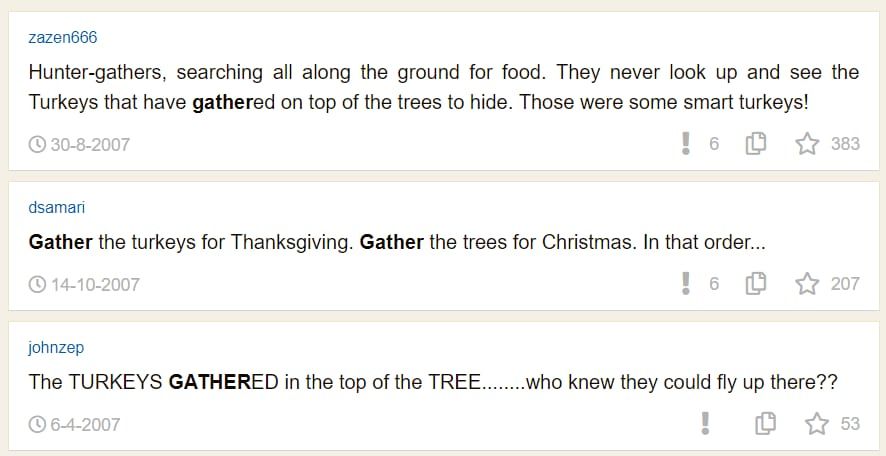
Instead of using Heisig's stories or trying to create my own (which I sucked at), I used other people's stories, then reviewed them in my Anki flashcards. Using this combination of tools, I managed to get through all 2,136 general-use kanji during a 3-month period around the summer of 2012.
The good part: I got through all of the kanji! And it was the confidence boost that I needed to continue pursuing my Japanese studies.
The bad part: I didn't actually remember all that many of my kanji mnemonics. Maybe about half? 70%? I don't know. But I forgot a solid amount over the next year.
Part of the problem was that I didn't really understand much about how my brain remembered things back then. I was reading these mnemonic stories, but I wasn't actually seeing anything in my mind's eye. And even when I did, the image's backdrop was this fuzzy bit of, well, nothingness.
Enter: Joshua Foerr, the science writer who "accidentally" won the U.S. Memory Championship.
Video unavailable: source URL missing from PDF.
I first learned of Joshua Foerr from the website Hacking Chinese, in an article titled “Remembering is a skill you can learn."
If you go look at that article, it will talk about the mechanics of memory. And the author gives a list of random words. When I first encountered that article, I read it four or five times, and I tried to memorize the list of words in it using the tactics discussed by Foerr. About six months later, I performed a little experiment: I tried to write out the list of words from memory, even though I had not looked at it or thought about it for over half a year:
1. Balloon
2. Cannon
3. Sun
4. Child*
5. King
6. Tree
7. Rabbit
8. Sword
9. Bottle
10. Rain
11. Ship
12. Book
13. Mountain
14. Shovel
15. Water
I was only missing one item: #4, Child. I read a list of random words, and I remembered over 90% of it over half a year later without reviewing at all. I was able to do so, because I made a mnemonic story that utilized my spatial memory (my actual memory of places and things that really exist). If anyone is interested, here's the story:
I stepped out of my apartment in Shimokitazawa, and I noticed a balloon tied to the banister at the top of the stairs. I went over to look at it, and there was a cannon at the bottom of the stairs aimed right at me! It fired, and I dodged it, but it made a hole in the roof, and the sun shined through it and hurt my eyes. I tried
to climb up through the hole to get away, but it was hard to get through. Luckily, a child helped pull me through the hole. “You have to kill the king," he said, pointing at a king sitting on my roof. Instead, I jumped off the roof into the big tree behind my house. In the tree, there was a rabbit, and the rabbit said, “Take this sword to kill the king with." I said, “No way." So then he gave me a huge bottle of beer, and he said “Drink this for courage." Suddenly it started to rain, and it flooded the entire neighborhood. I thought I was going to drown, but luckily a ship came by. So I climbed into the ship. In the ship, the captain was reading a giant book. “How do you build a mountain?" he asked. “I don't know," I said. “You start with a shovel," he said. I looked out around the ship, and there was water everywhere.
That might seem like a very long, detailed story, but it only takes me about 10-15 seconds to go through the whole thing in my mind. There are some notable aspects of it that I'd like to point out:
- The story is full of real places that I am extremely familiar with:
- The banister at the top of the staircase outside of my actual apartment in Shimokitazawa (where the balloon is tied).
- The bottom of the staircase I walked down every day (where the cannon is).
- The metal roof over the area outside of my front door (which the sun shines through and hurts my eyes after the cannon blows a hole through it).
- The big tree right behind my house.
- The story is a little bit ridiculous, because ridiculous stuff is easy to remember.
- For example, items are out of proportion. The bottle of beer is huge. The book is giant.
Our minds are capable of amazing things. In particular, scientific studies have shown that our spatial memories are particularly reliable. For example, it's pretty easy to find your way to work/school/home only a few days after moving to a new place, right? But reading directions to those places might seem confusing.
Luckily, the same type of memory can be utilized when tackling tedious numbers, facts, and (you guessed it) kanji characters. Remember when I provided the following mnemonic sentence?
"I saw a bunch of turkeys gathered in the tree outside my window."
See that underlined part? It might seem superfluous, but it's actually crucial to the mnemonic. By placing the story in an actual place that I know, it becomes part of a real-world context. Another way to think of it is that I am creating false memories in real-life places. This, I would argue, is the key ingredient missing from Heisig's method, and from most of the koohii stories, too. They do not utilize the power of spatial memory.
Luckily, we can. I'll show you how.
Remember the following character, which Heisig labels as meaning "straightaway?"
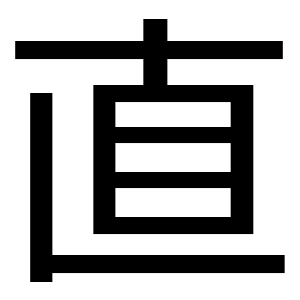
How are we supposed to remember all of those lines?!
Let's start by splitting the kanji in to parts.
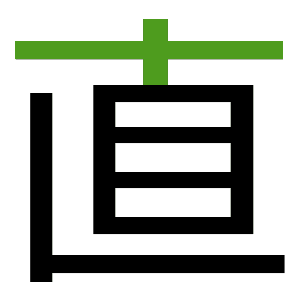
⼗, by itself, is the character for "ten" in Japanese. This is pretty easy to memorize: "t" is for "ten." Another option is to tilt your head so that it looks like the Roman number for "ten," X.

⽬ means "eye." This one's also not too hard. It looks kind of like an eye, if you warp the shape of it a bit:
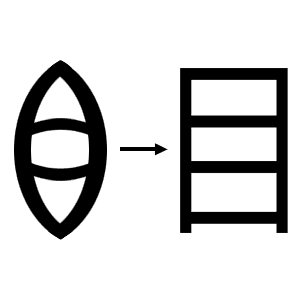
Finally, we have:
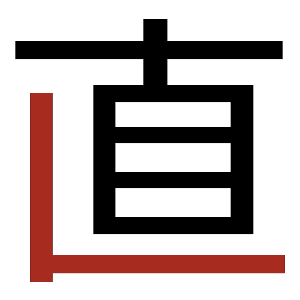
This primitive element is not a kanji on its own, which makes it a bit more problematic. Heisig gives this primitive element the meaning of "fishhook." I guess that's all right, so we can go with that, too (for now).
In summary, we have:
ten + eye + fishhook = straightaway
We're listing the meaning of this kanji as "straightaway" because that is the single meaning that Heisig and his editors chose to give to this character. If I'm being entirely honest, I'm not a big fan of using this meaning. I would prefer to have this character's single meaning be something like "direct" or "directly."
There may be multiple times when you absolutely despise the keyword provided by Heisig, particularly when he tries to provide a clever keyword for a kanji that expresses an idea that cannot be easily expressed in a single word in English. The most famous example of this is Heisig's use of "decameron" (a word no one knows!) for 旬, when really he could have just used a 2-word phrase like "10 days." Some people writing stories on koohii choose to alter these keywords, and you can do that,
too. In such a case, though, you should consult the appendix of his book to ensure that you are not assigning the same keyword to multiple kanji, which is prone to happen if you're not careful.
Or you can just use whichever keyword you're given. In most cases, I would advise against changing Heisig's keyword. However, I would alter a very large percentage of the labels for primitive elements, which we'll discuss in just a moment.
I can't say that I love Heisig's mnemonic for 直 ︓
Begin with the top two primitives, needle and eye. Together they represent the eye of a needle. Below them is a fishhook that has been straightened out and its barb removed so that it can pass through the eye of the needle.
- James W. Heisig, Remembering the Kanji 1
I'm terrible at remembering stories like this. Without looking it up online, I can't even get a very clear picture in my mind of what the barb of a fishhook looks like. Even if I did, this story's image is appearing in a vacuum. It has no relevance to my experiences on this planet.
One of the stories on koohii gives us a somewhat clearer image:
If you get a needle in your eye that is hooked in there, get to a hospital straightaway.
↑ I used stories like this one to get through the kanji. But I think I would have remembered them a lot more easily if I had used stories that were:
1. Connected to me personally and placed in a real-world location that I know.
2. Built using primitive elements that are crystal-clear images in my mind.
Let's take a look at how that might work.
A needle is pretty easy to imagine. But there is no emotion attached to such a general word. What if we made this primitive element be ninja needles (i.e. senbon), like these ones:

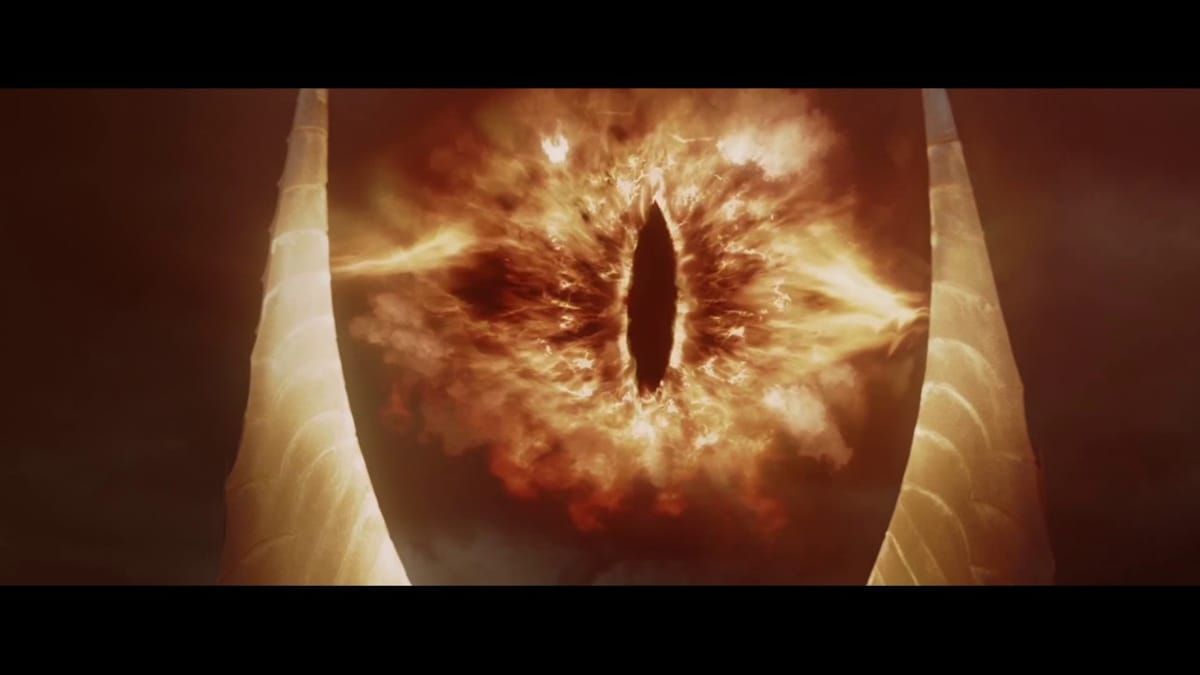
An eye is easy to picture. Heisig also uses eyeball, which has a more graphic nuance to it. Memorable, maybe. But not as memorable as The Eye of Sauron:
Fishhook? Meh. Captain Hook? Hell yes:

We can take these more memorable primitives and place them somewhere that we know:
The moment you walk out the front door of your house, Captain Hook throws a ninja needle right in your eye! It burns! In fact, it morphs into the Eye of Sauron! You need to get to a hospital straightaway.
↑ This seems like a story that we are more likely to remember.
Am I saying that you should make stories like these for each and every kanji? Only if you want to. There are both pros and cons to making mnemonics like the one above.
Pros:
- The stories are in a place that you are familiar with in the real world. You should be able to close your eyes and have no problem "going" to the area just outside your front door. This can also be done with places that you know but have never been to, such as the setting of a TV show (e.g. Joey and Chandler's apartment in Friends) or video game (e.g. Whiterun in Skyrim).
- The primitive elements are very easy to picture (for me, at least).
- It is a lot of fun to both (1) think of silly stories like this, and (2) think back on the stories after making them.
Cons:
- The stories often take too long to create. We need to get through the kanji fast because there are so many of them. Also, the longer we take to get through them, the more chances we have to think about quitting. Now, it didn't take me very long to think of the story above. Maybe a
couple minutes, at most. But writing stories down adds extra time, especially if you're like me and want all of the italics and bold text perfectly formatted. For this reason, I probably wouldn't write my stories down if I had to re-learn kanji. If you forget a story, it probably wasn't that good to begin with, anyway, so writing it down doesn't make all that much of a difference. You can always replace a bad story with a better one later.
- Though the primitive elements are nice and clear, the kanji itself — the punchline of our story, if you will — "straightaway," kind of falls flat and is not memorable. Words like "straightaway" that express intangible concepts are inherently more difficult to make kanji stories for. And in many cases, they may need to evolve or be tweaked for you to remember them well. For example, maybe I find it easier to remember 直 as signifying some kind of portal that allows me to go somewhere (e.g. a hospital) "straightaway" (i.e. instantly). It's hard to know which stories will stick until a while after you've created them.
- Non-primitive elements tend to enter the stories. The "front door," for example, has nothing to do with the kanji or primitives. There is a slight chance that this will cause confusion later on when encountering a kanji like ⼾ (door). (I wouldn't worry about this, though.)
- This story came to me right away, but that won't always be the case.
Kanji that we have learned using mnemonics can then be used as primitive elements in more complex kanji.
For example, a long time after encountering the kanji 直 (straightaway), we'll encounter the kanji 値 (price), which is a combination of ⼈ (person) and 直 (straightaway).
⼈ (person) can be remembered pretty easily because it looks like a person (uh... sort of). But I recommend using a specific character or image even when this is the case. For this kanji, for example, we could use Pinocchio as our image for "person" because he dreamed of becoming a real person.

Thus, our story for 値 (price) could be something like this:
(Captain Hook threw a ninja needle into my eye, morphing it into the Eye of Sauron, so I need to get to a hospital straightaway. Then...)
Pinocchio (⼈) shows up and offers to take me to the hospital straightaway (直)... but only for a price (値).
(Imagine Pinocchio rubbing his fingers together saying it'll cost me.)
↑ Basically, we need to do this a little over 2,000 times.
That is what I'm referring to in this course when I discuss "the mnemonic method." In the next section of the course, I'll walk through the specific ways in which we can use this method to work our way through thousands of kanji.
Before we get to that, however, we still need to discuss "the organic method" (next lecture) and the (combination of) methods that you personally decide to use in your kanji-learning journey.
Hang in there, friend. We're making progress.
Niko
