


- JLPT N4
のに (for)
 Niko

JLPT N4: のに (for; to)
のに can be used like the word "for" in the sentence, "This pan is good forfrying eggs."
In Japanese, though, the word order gets changed. (Big surprise.)
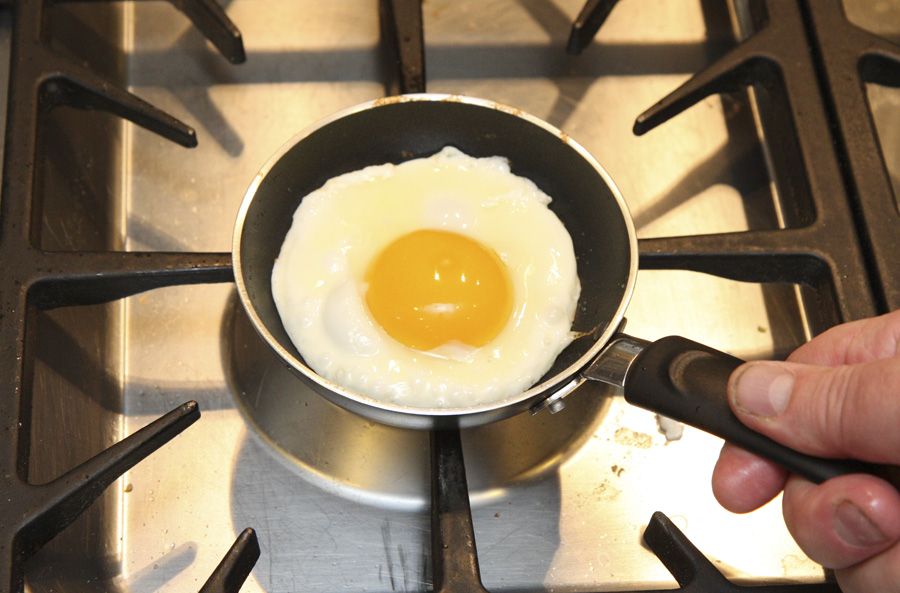
They say something like: "This pan frying eggs のに good is."
Well, if we want to get really technical, the Japanese would be something like: "This pan は fried egg を make のに convenient is."
Let's see that in an example:
このフライパンは目玉焼きを作るのに便利です。
この フライパン は めだまやき を つくる のに べんり です。
This (frying) pan is good [convenient] for frying eggs.
A sunny-side-up fried egg is an "eyeball-grill" because it looks like a yellow eye... I guess...
Have you ever noticed that we put -ing on the end of verbs when they come after "for?"
That's because we need a noun after "for."
We can't say: "This pan is good for fry eggs."
We have to say: "This pan is good for frying eggs."
Similarly, we shouldn't say "This pan は fried eggs を make に convenient is."
We should say "This pan は fried eggs を make のに convenient is."
That makes sense because の can be used to turn verbs into nouns. (We recently had a very detailed lesson on this topic: Basics: Making Nouns with の.)
☔ Grammar Rules ☔
Put のに after a VERB in its dictionary form:
V る + のに
for VERB-ing
We already saw this in our first example.
It is also possible to put just に after a する-NOUN (i.e. a noun that expresses an action of some kind; a noun that can attach to する):
する-NOUN + に
for NOUN-ing
Here's an example of that:
わたしは日本語の勉強に、フラッシュカードのアプリを使っています。
わたし は にほんご の べんきょう に、 フラッシュカード の アプリ を つかっています。
I use a flashcard app to study Japanese.
We don't need to put の before に in this sentence because に has no problem attaching to a NOUN (=勉強). The only reason we put のに after VERBS is to that we can place に after a NOUN (because "VERB + の = NOUN," as we saw in the lesson mentioned earlier.)
On another note, you may be wondering why I translated that sentence as "to study Japanese" instead of "for studying Japanese." Either way would be fine, actually. Perhaps "for studying Japanese" would be a bit closer to the literal meaning of the Japanese. I thought that "to study Japanese" sounded more natural, though.
You will notice that のに is typically preceded by a phrase describing something's purpose or utility. Then it is followed by words meaning "convenient," "necessary," "useful," "use," and so on.
[purpose or utility] + のに + ["convenient," "necessary," "useful," "use," blah blah blah]
For example, we have already seen:
(this pan...) make a fried egg + のに + (is) convenient.
(I...) Japanese studies + のに + am using a flashcard app.
And in the following sentence we have:
(this suitcase...) go on a one-night trip + のに + (is) perfectly suited
このサイズのスーツケースは1泊2日の旅行に行くのにぴったりだ。
この サイズ の スーツケース は いっぱく ふつか の りょこう に いく のに ぴったり だ。
This suitcase size is perfect for a one-night stay somewhere.
Sometimes you'll find that のに is followed by the particle は, as in our next two examples:
銀行口座を開設するのには電話番号が必要です。
ぎんこう こうざ を かいせつ する のに は でんわばんごう が ひつよう です。
A phone number is required to open a bank account.
格安航空券を探すのには、このサイトが便利です。
かくやす こうくうけん を さがす のに は、 この サイト が べんり です。
This site is convenient for finding cheap airline tickets.
When のに is followed by は, it is possible to leave out the の.
I explained earlier that putting に after a VERB is not correct grammatically, but it sounds OK in this case. This is because it's understood that the の is being omitted. Saying three particles in a row, のには, is a hassle!
That's my guess as to why it's acceptable, at least...
永住権を取得するには1年以上かかります。
えいじゅうけん を しゅとく する に は いち ねん いじょう かかります。
It takes over one year to acquire permanent residence.
This is one of those grammar points that I have found useful over and over again when trying to express myself in Japanese.
Japanese speak のに convenient です!
So be sure to take your time getting a good understanding of this one.
Niko
