


- The 97-Day Challenge
Walkthrough, Part II
 Niko
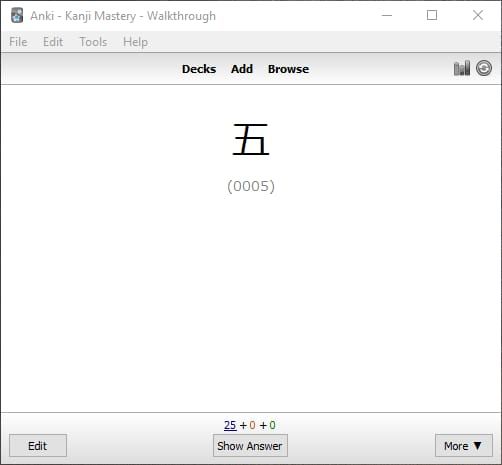
I always found the kanji for "five," 五, to be a bit tricky:
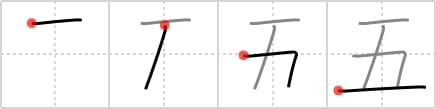
Part of that has to do, I suppose, with the fact that it's a character best remembered as is, without trying to make any stories:
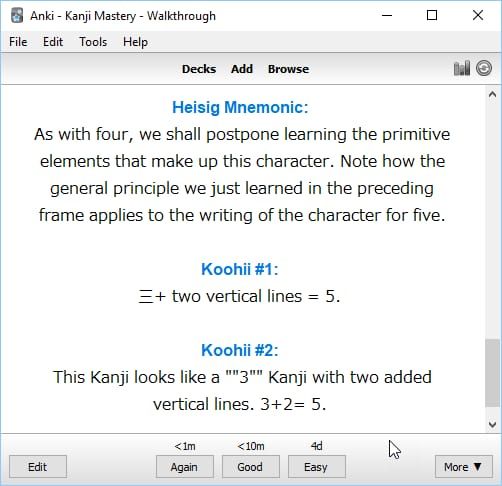
It may help to remember that 3 horizontal strokes, plus 2 vertical ones, equals 5. This is what both of the Koohii stories went with:
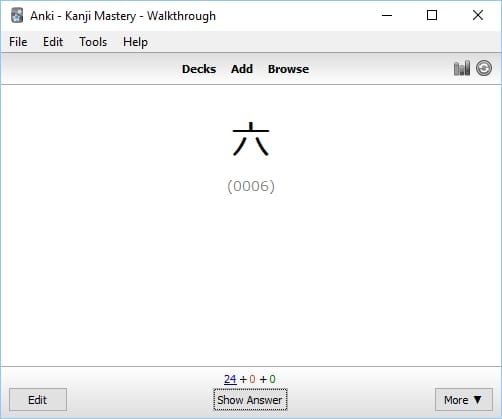
Our next kanji is 六, "six."
In this kanji, we have two new primitives, "top hat" and "animal legs:"
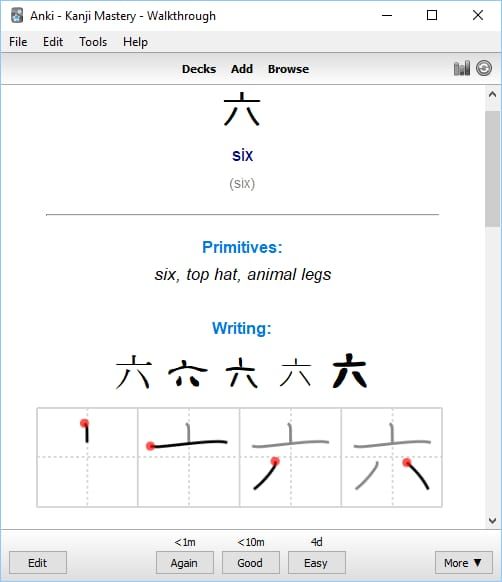
(↑ Under Primitives, "six" refers to the entire character.)
Heisig wants us to just remember the character as is and then learn the primitives "top hat" and "animal legs" later, which is why they do not appear at the beginning of the primitives PDF:
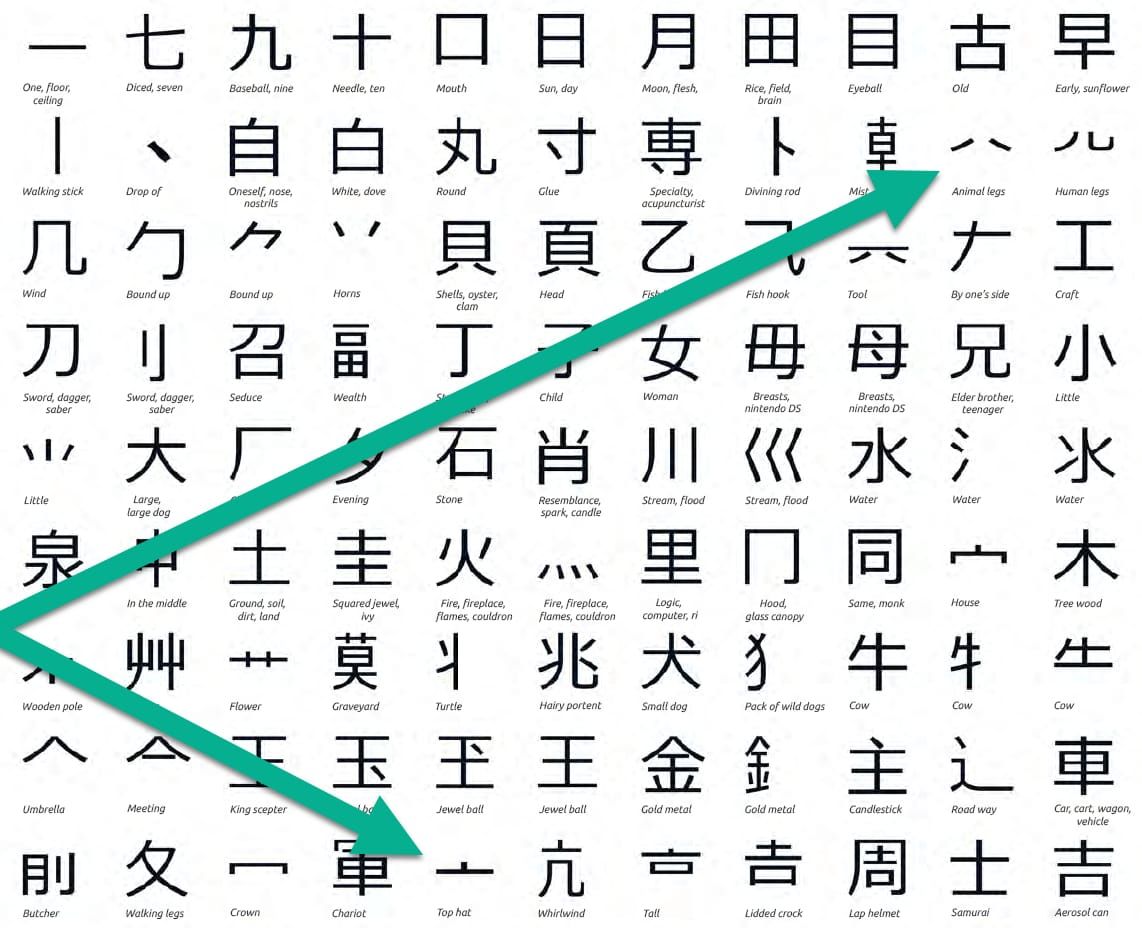
I say we go ahead and learn these primitives anyway.
However, as you might have guessed, I'd like to make them more memorable.
Instead of "top hat," I think the "Sorting Hat" from Harry Potter is more memorable:

For "animal legs" (which always appear at the bottom of a kanji, by the way), we can go with "octopus legs" (or "cephalopod limbs," if you're in to marine biology):
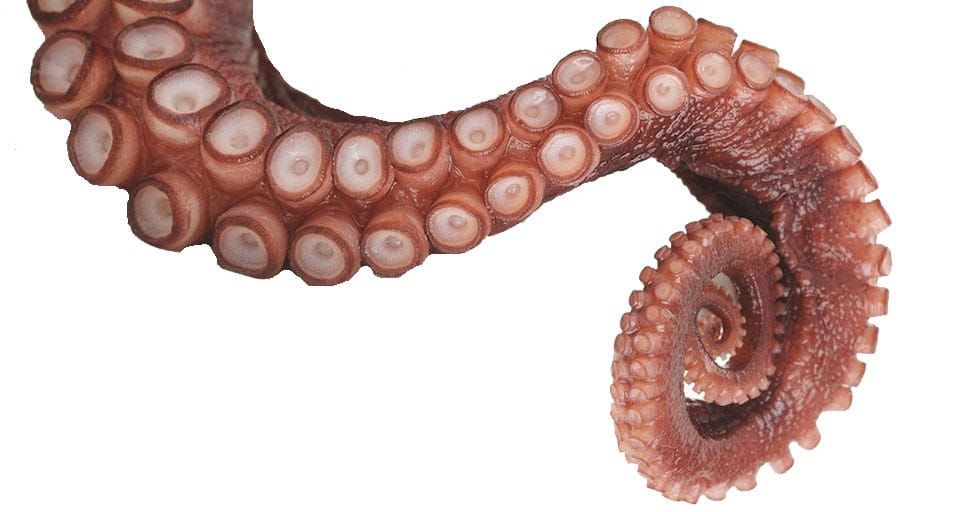
(↑ You can choose a different animal's legs, if you'd like. Just don't choose a human because we don't want to get this mixed up with "human legs" (that is, "fishnet-clad, feminine-looking legs.")
Just like that, we have a pretty solid image for the kanji 六 ︓ The Sorting Hat with octopus legs.
Let's drop it in to a real-life location. Most of the time, I like to write stories in a path. For our story for 四, "four," we were in the entrance of the Equinia Building:
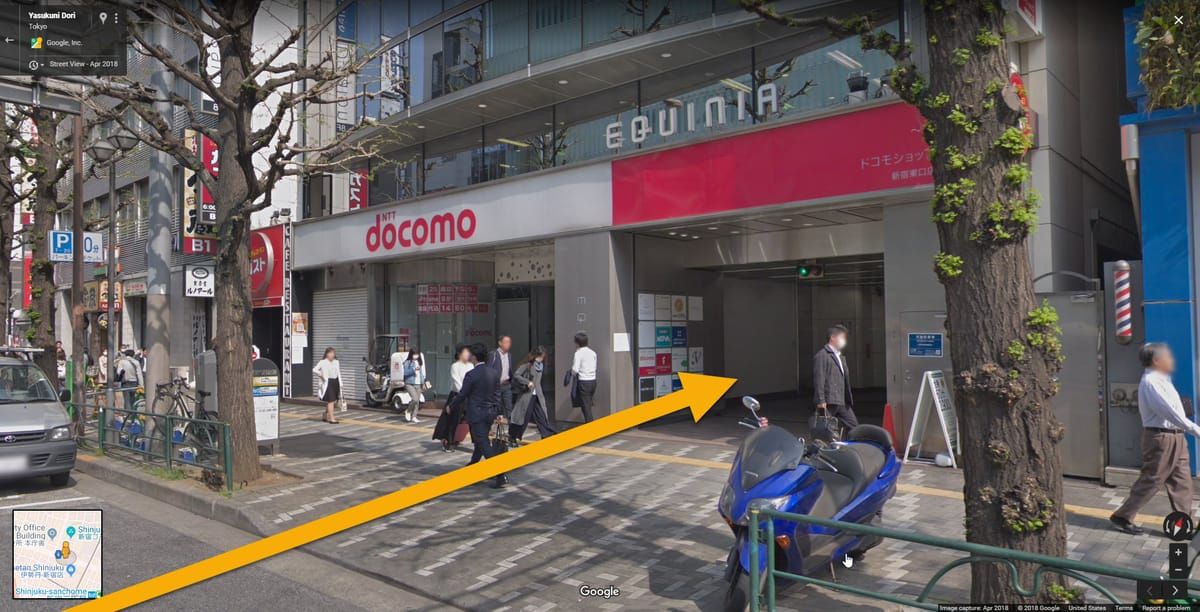
After passing Pac-Man with four feminine legs, we walk out onto the sidewalk and run into the Sorting Hat with octopus legs:
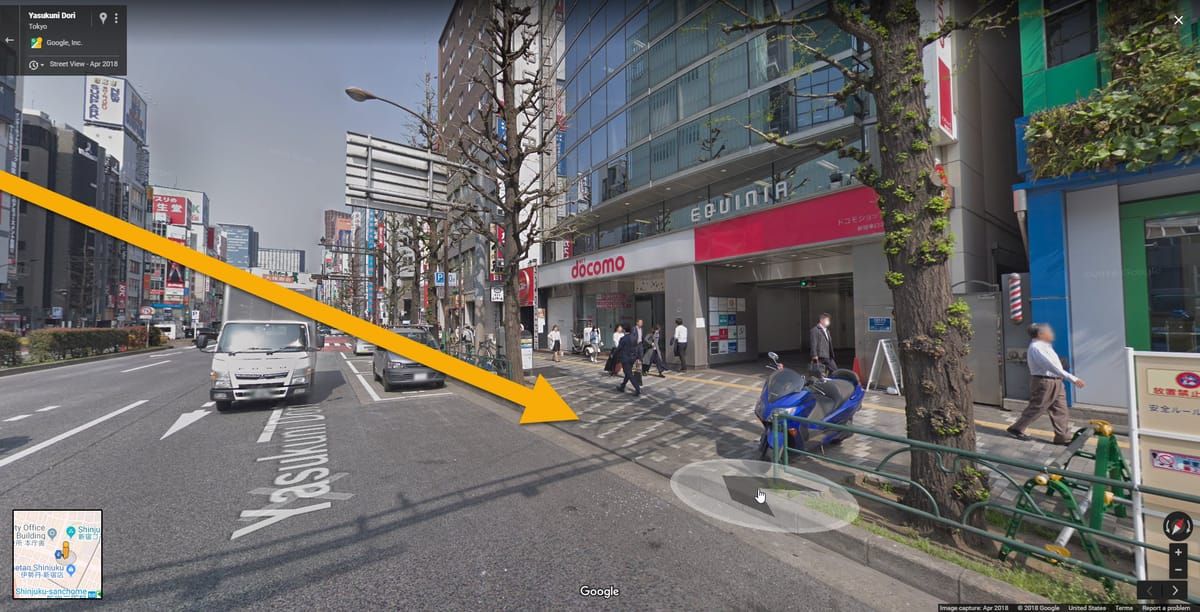
How does any of this help us to remember the actual meaning of the kanji 六, "six"?
That's tricky, and this is where we have to get creative... and where a lot of my mnemonics falter. In this specific case, we could imagine that there are actually six Sorting Hats, each with six sets of six octopus legs:
六六六六六六
666—the mark of the beast!
Anyway, let's move on. I don't want to get any nightmares...
The kanji 七, "seven," isn't too hard because it looks like an upside-down 7:
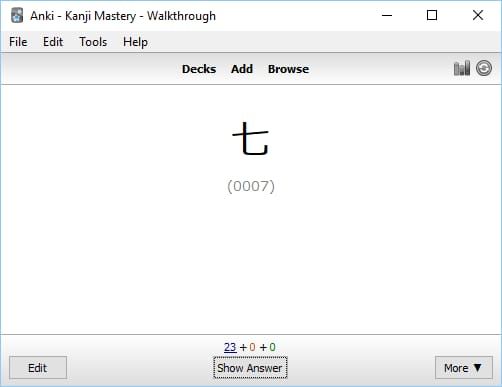
There is one extra line:
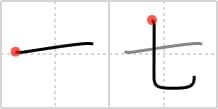
But the second Koohii mnemonic can help us with that:
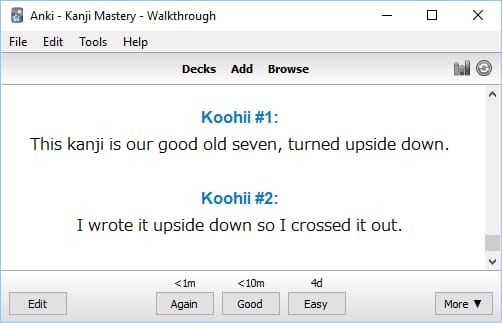
It is worth noting that this entire character can mean "diced" when it appears as a primitive:
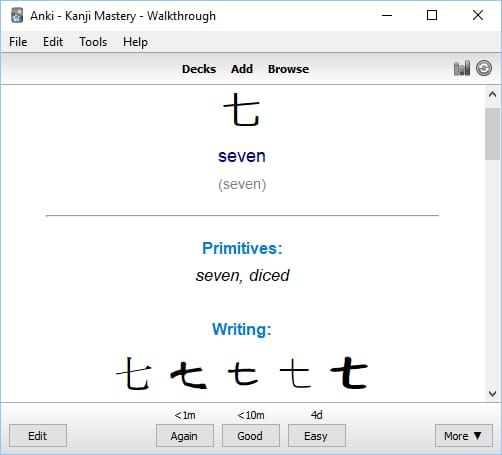
Heisig explains:
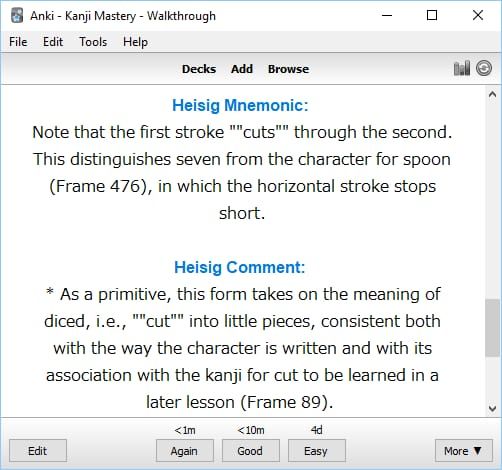
Anyway, I don't think we need a special mnemonic for 七.
Next we have ⼋, "eight:"
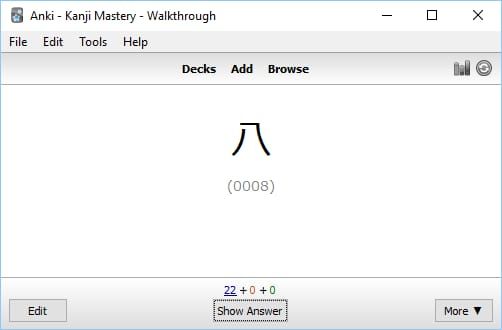
Like most of the other numbers, this kanji doesn't exactly lend itself to being made into a fancy mnemonic.
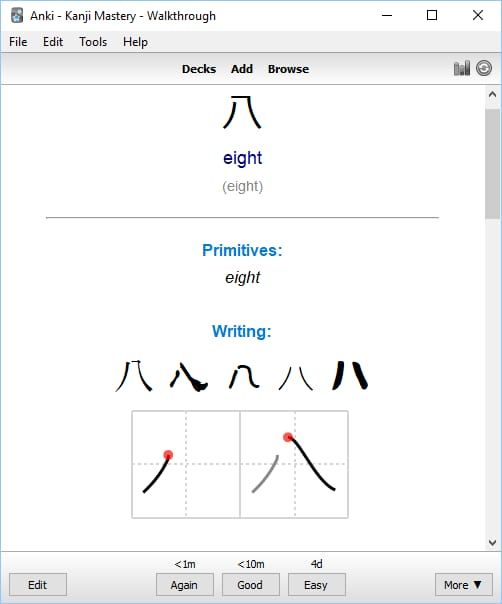
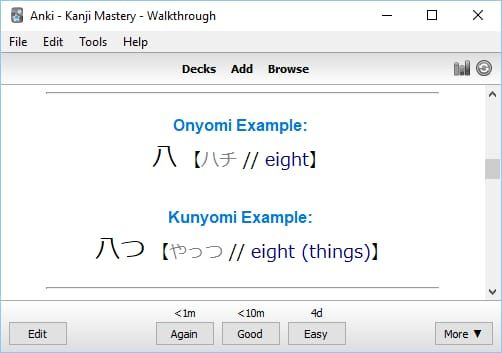
I say we follow the advice of one of the Koohii mnemonics, which is that character for "eight," ⼋, looks a lot like the katakana for "ha," ハ.
This is relevant because the word for "eight" is ⼋ (はち). Write it in katakana, and we can see the ハ. In fact, the onyomi example in our flashcards shows just that:
九 means "nine:"
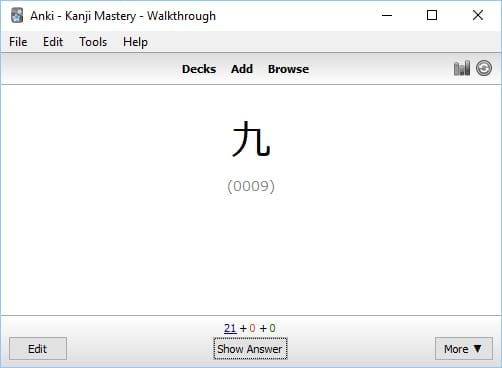
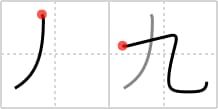
This is yet another number that we should just remember as is, without creating any special mnemonics:
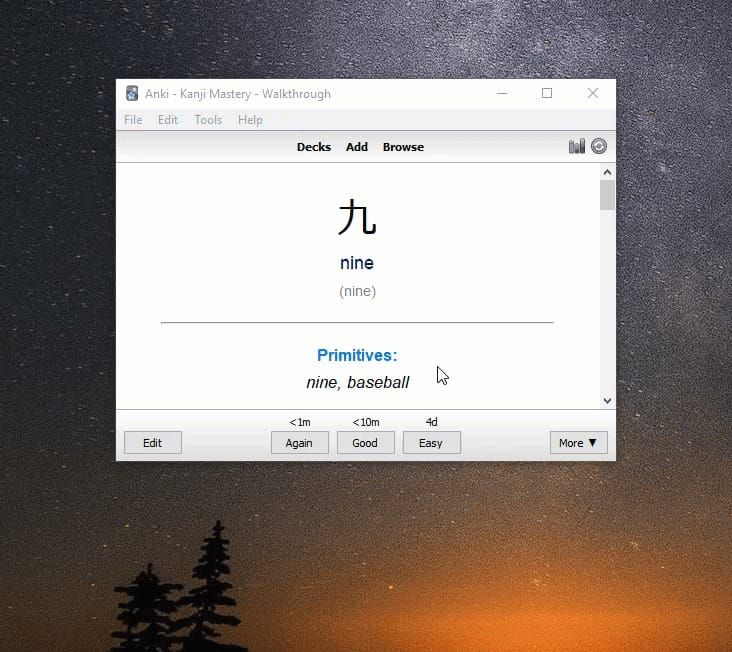
As a primitive, Heisig chooses the additional meaning of "baseball" for this character (because a baseball team has nine players). We can decide if we want to alter that later when we see it appearing in other kanji.
A Warning About Koohii Mnemonics:
It is certainly helpful to have multiple ideas for our mnemonics, which is why we include the Koohii ones in our flashcards. However, sometimes the mnemonics provided can be quite vulgar. This is a prime example, as the second Koohii mnemonic says:
A woman in the doggie style position, waiting for my NINE inches.
If you're studying kanji with young children, you may want to be careful to check what the Koohii mnemonic says before showing them. Another option is to simply remove the Koohii mnemonics from your cards. To do this, you can go to "Edit" → "Cards" and then remove the last 10 lines or so from the "Back Template:"
Hang in there. We're almost to the part where we actually start building kanji with primitives instead of remembering characters as is...
⼗ is "ten:"
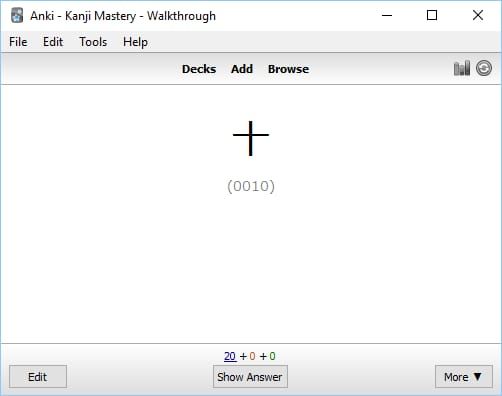
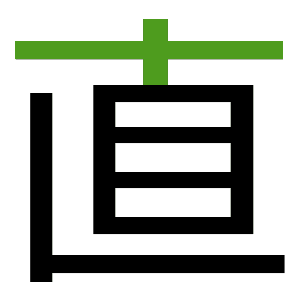
"t" is for "ten," yeah? We saw this character earlier when we were deconstructing 直, "straightaway."
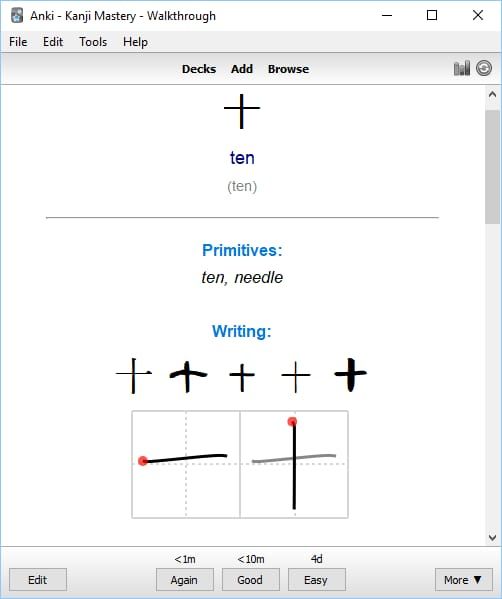
Heisig labels this as the primitive "needle:"
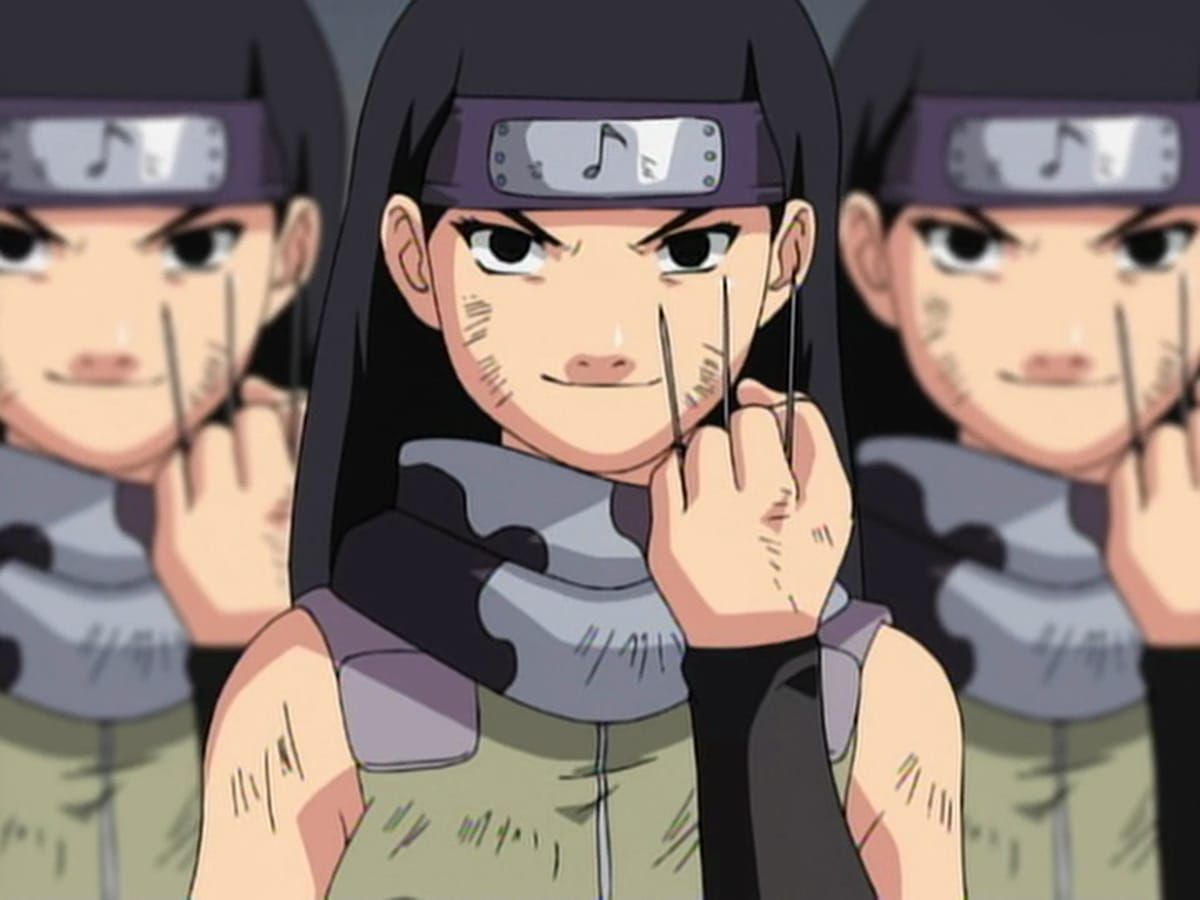
...which I changed to "ninja needles" (senbon).
We're done with the numbers!
I've never been a big fan of studying numbers in other languages, so maybe I'm happier that we're done than you are.
Time to add a bit of variety to our kanji knowledge...
Niko
