


- The 97-Day Challenge
Walkthrough, Part III
 Niko
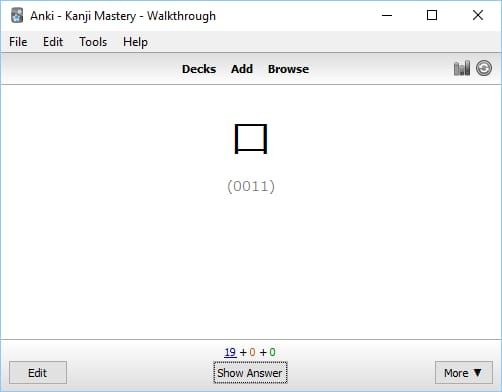
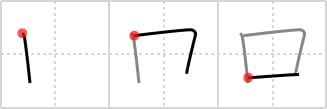
⼝, "mouth," is our next kanji:
We technically already learned this when we studied 四, "four," because "mouth" (or "pent in") is the primitive on the outside of the kanji... which we changed to Pac-Man.
By the way, the kanji for "mouth" is square and not circular because there are no circular shapes in kanji.
Next, we have the kanji for "day," ⽇ ︓
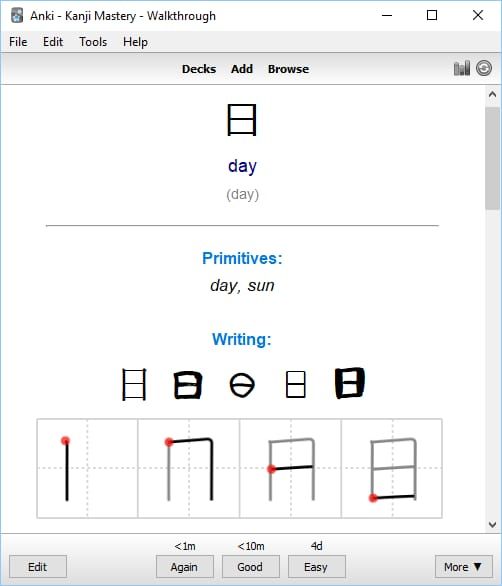
As is hinted at in the primitives, the kanji ⽇ can also mean "sun." Heisig adds a third primitive meaning, also: "a tongue wagging in the mouth."
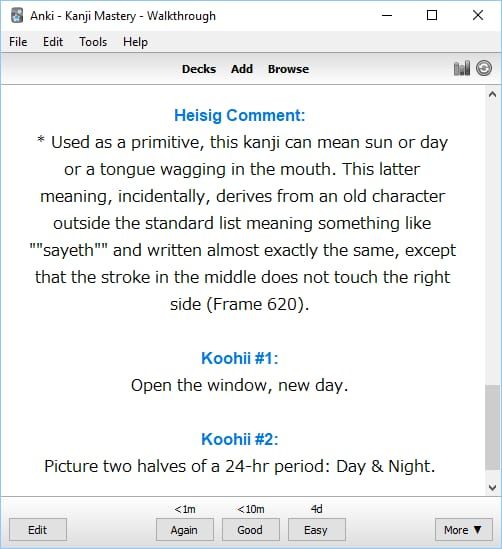
I used to use the primitive meaning of "a tongue wagging in the mouth" in my own mnemonics back in the day... and it never helped very much.
Maybe, instead, we should have the primitive be "a tongue tied in a knot."

The kanji doesn't look like that, but ⽇ is so common as a primitive element that we'll have difficult not remembering its meanings.
To get a specific image for "sun," we could use a happy-looking sun like this:

Or we could use the nightmare-inducing sun from the Teletubbies:

You might be starting to think that I am going to say we should just remember all of the kanji just by looking at them, since I've done this so many times so far.
But the building of kanji with primitives happens mostly after we get through a handful of these early characters. Bear with me, please.
Another kanji we want to memorize visually: ⽉, "moon."
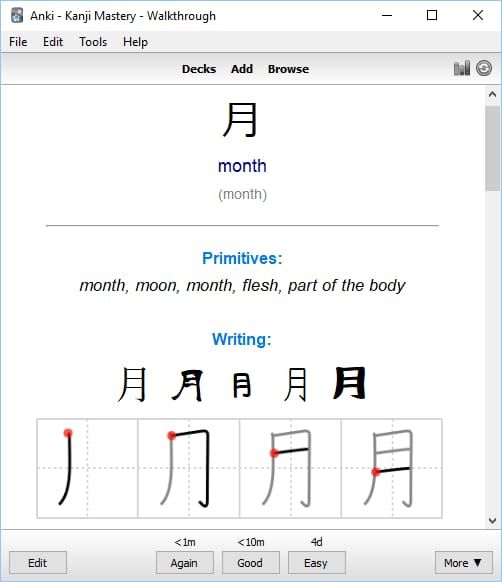
I think that the first Koohii mnemonic is sufficient for us to memorize this one:
A month (⽉) is longer than a day (⽇).
There are quite a few primitive meanings for this kanji, aren't there? Aside from "month," we have "moon," "flesh," and "part of the body."
I like the idea of using Sailor Moon:

Our 14th kanji is ⽥, "rice field."
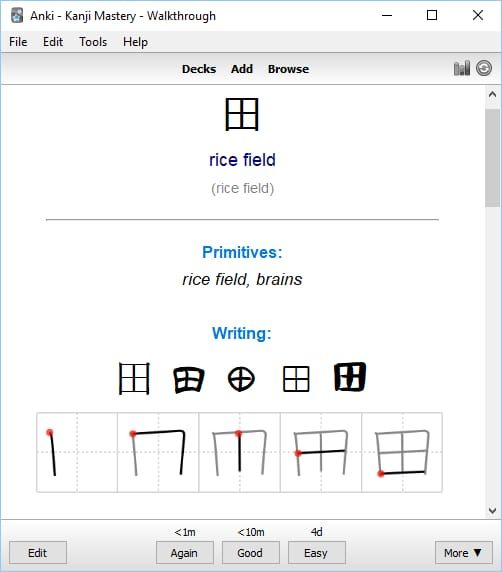
It looks like a rice field seen from above, so I don't think that's too heard to remember.
As a primitive, it can mean "rice field" or "brains." I think that these primitive meanings are a bit too vague. If you like Futurama, maybe it would be more helpful to think of it as a "floating space brain:"
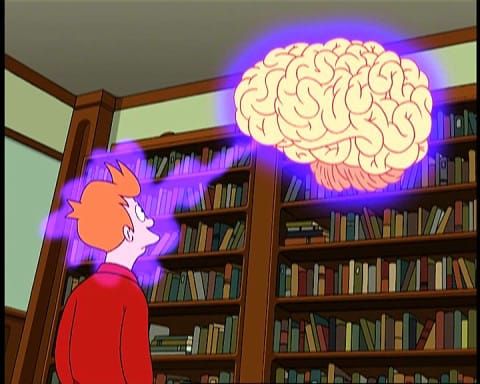
Or any kind of brain- or rice-field-related character. Figuring out the perfect primitive meaning comes with time while testing out stories, so we don't need to worry about it too much just yet.
Next is ⽬, "eye:"
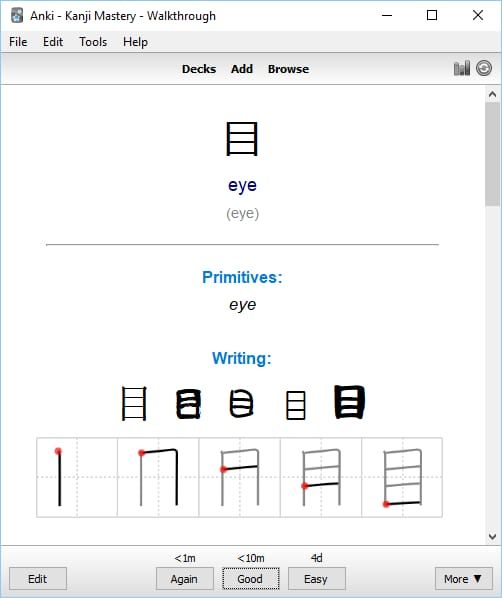
This one is easy:
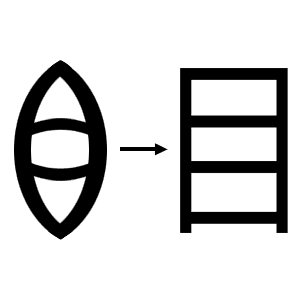
You will, I hope, recall that we already saw this kanji being used as a primitive in the kanji 直, "straightaway:"

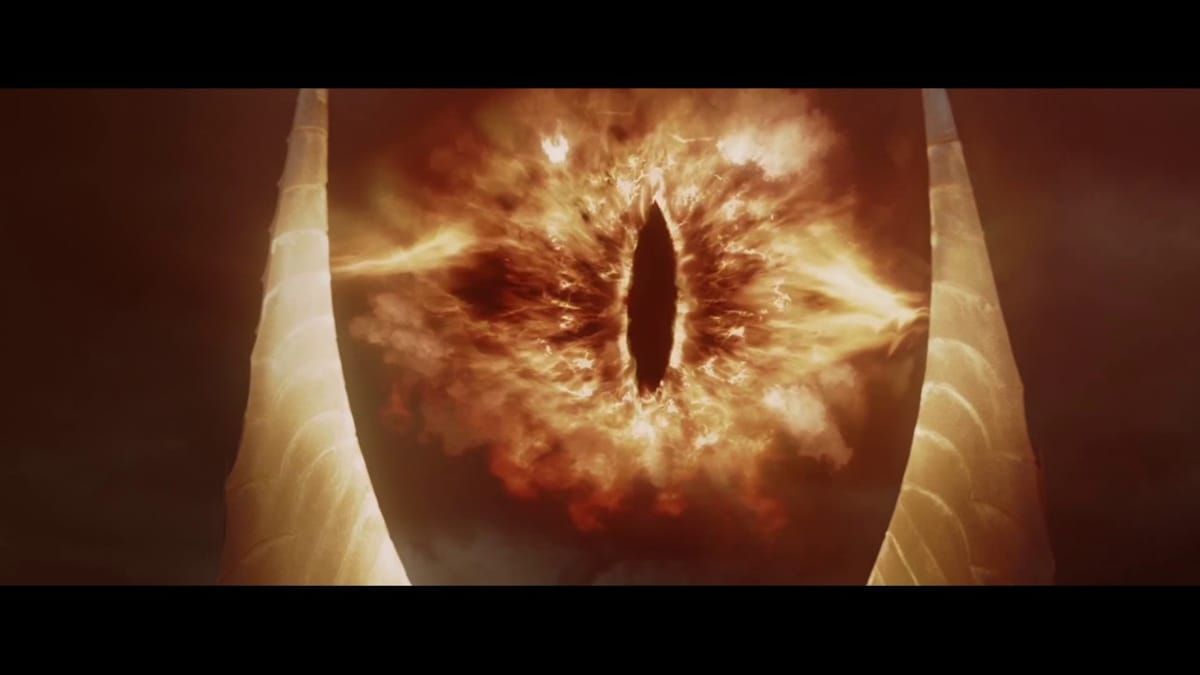
You may also recall that we chose to call it "the Eye of Sauron," which is a bit more memorable:
Next up we have the kanji for "old," 古 ︓
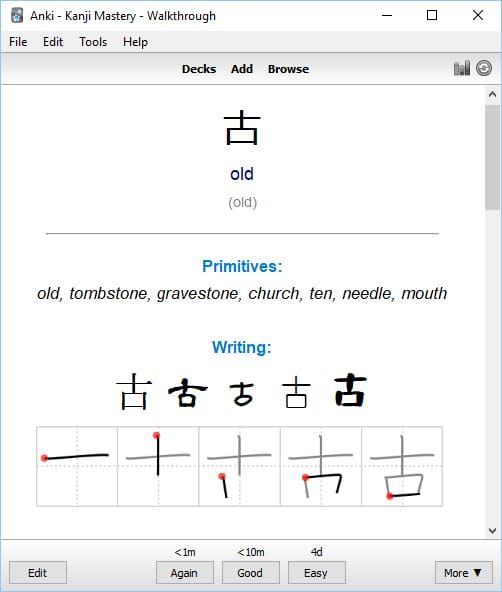
We have multiple options for remembering this kanji. One, we could follow Heisig's advice and imagine that it is a pictograph of a "tombstone," which he also lists as a primitive element.
Or, two, we we could make a story using ⼗ (ten, ninja needles) and ⼝ (Pac-Man).
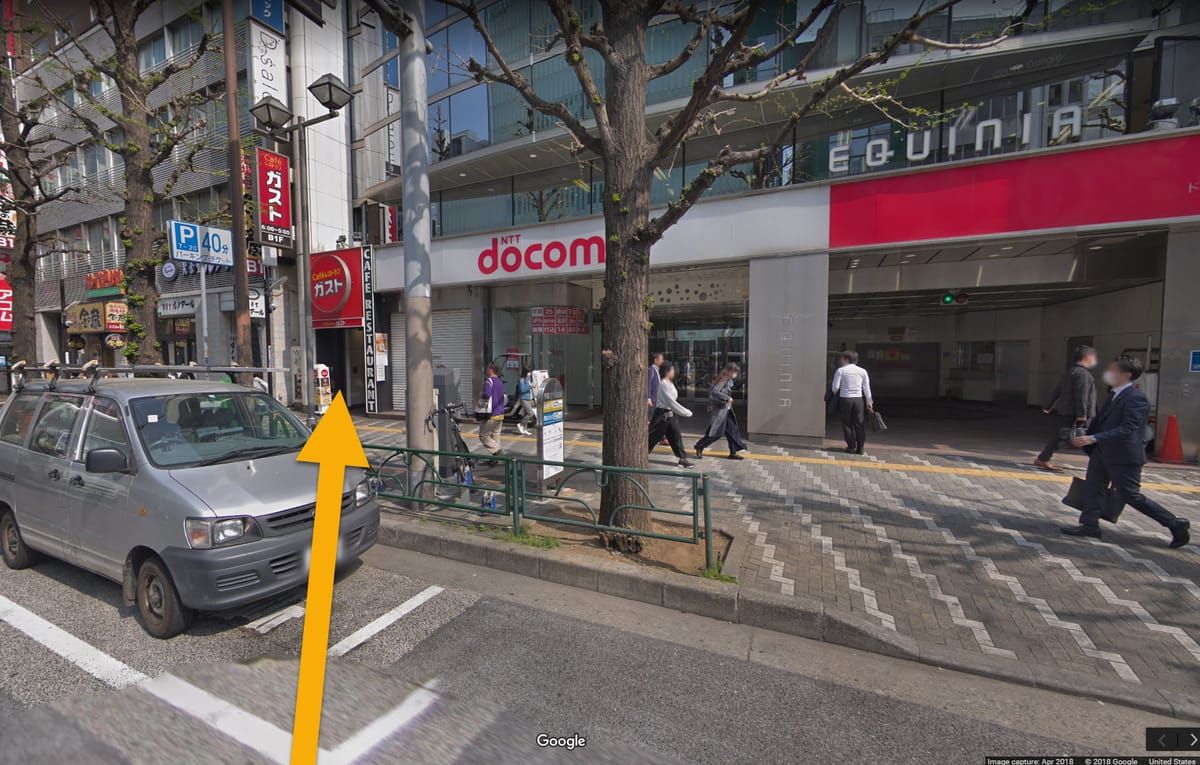
For example, after stepping out of the Equinia Building, I turn right (because that's the direction of Shinjuku Station), and I see ten elderly (i.e. old) Pac-Mans (Pac-Men?) filing into ガスト (a family restaurant) so that they can get the early-bird special. (It may help to imagine a weak/old-sounding cacophony of Pac-Man noises as they enter the restaurant).
Reviewing without Flashcards
One reason that I like to place consecutive stories in a path along a real-life series of locations is that I can form a lengthy story.
If we wanted to get fancy, we could say that I'm building a "memory palace," which is what these are usually called.
These are really helpful because you can review them without looking at anything. Sometimes it's too inconvenient to pull out your phone or put on headphones to start studying Japanese, but it's rarely too inconvenient to slip into an artificial memory of yours.
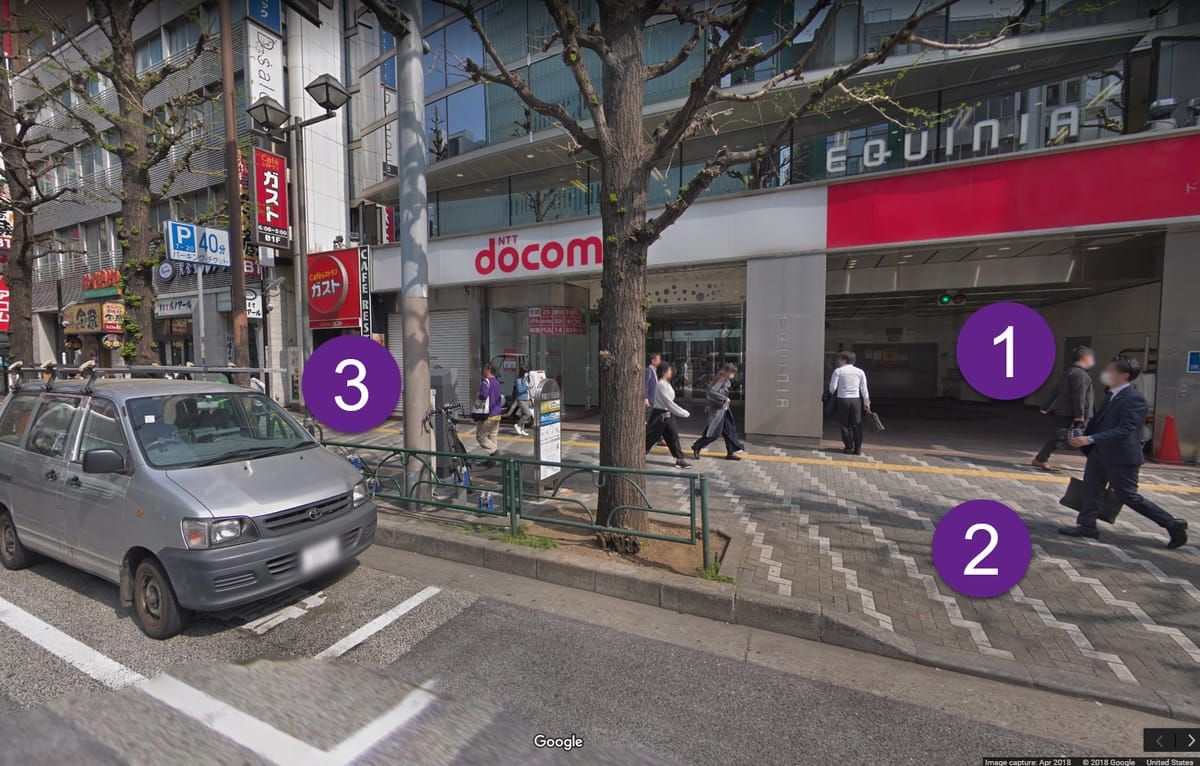
❶ I step out of the Equinia Building, and I'm met by Pac-Man with four fishnet-clad, feminine-looking legs. (四)
❷ I manage to get past him, but then I run into six Sorting Hats each with six sets of six octopus legs. Ahhh! (六)
➌ I turn right and start walking, hoping the Sorting Hats haven't noticed me. As I'm passing ガスト, I see ten elderly Pac-Mans filing in there for the early-bird special. (古)
While going through this story, I can write the kanji on my hand (which should be pretty simple with a bit of practice, as long as you can remember all of the primitive elements).
In time, it's possible to build a path of mnemonics (i.e. a memory palace) that is 100 kanji long. When you start to run out of places to stick new kanji mnemonics/stories, you can just start a new path of stories (i.e. a new memory palace) in a different location that you know, like your home, your parents' home, your office, your commute to work or school, your drive to the grocery store, the grocery store itself, etc.
吾 is "I."
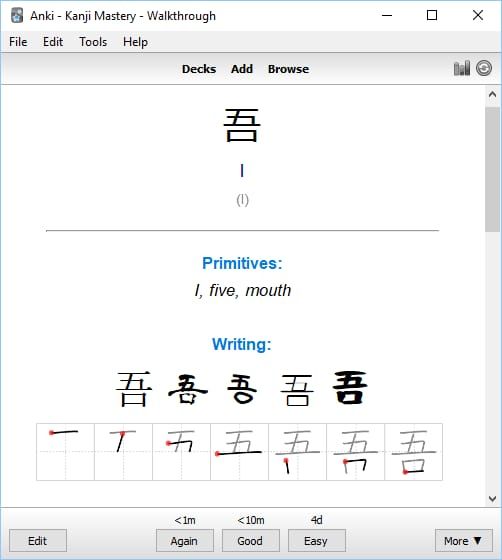
There I am, watching the ten elderly Pac-Mans file in to ガスト, when suddenly everything goes quiet. I cannot hear a single thing. I touch my face and am horrified to realize that the five holes of my head (my ears, nostrils, and mouth) have all turned in to mouths. I... I... I'm a monster.
Meh. Not the best mnemonic, I suppose... although the horrifying ones tend to be quite memorable. This kanji isn't really worth spending too much time on, as the NS Note in the flashcard points out:
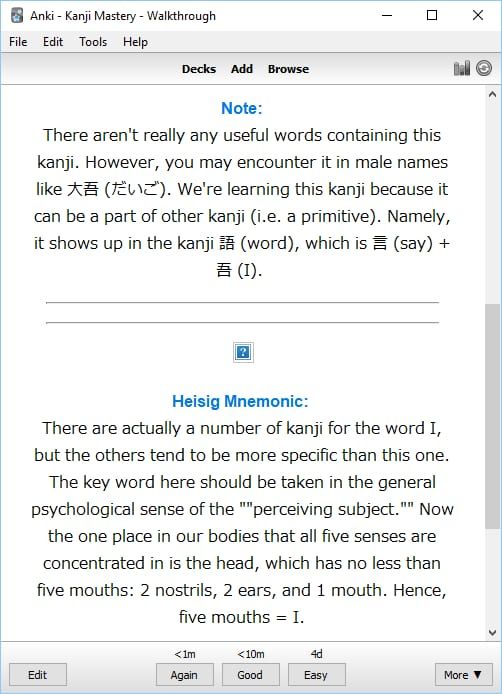
↑ Note that there are also no example words or image for the kanji, since it's basically useless.
Things are starting to get fun now!
See you in the next lecture...
Niko
